









How to Fix a DVD Player That Won't Read Discs
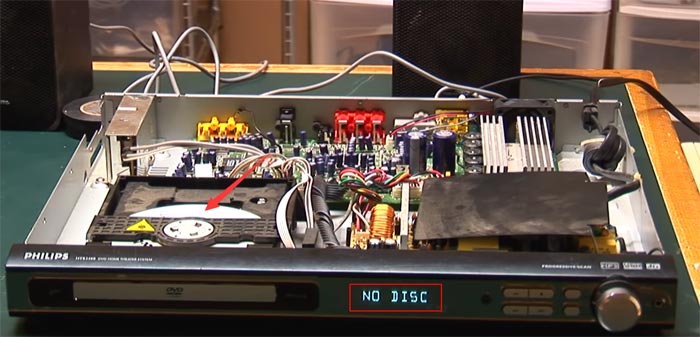
When a DVD player spins but displays “No Disc,” ejects the disc, or refuses to play certain DVDs, the cause isn't always a dirty laser lens. A scratched disc, unsupported format, or failing reading mechanism can produce similar symptoms on Sony, LG, Samsung, Philips, Panasonic, and other players.
Start by testing a few known-good, compatible discs. If only one DVD fails, check the disc itself; if several fail, the player may need further troubleshooting. The following fixes cover common causes of DVD players not reading some or all discs, including cases where the disc spins but won't play.
Fix DVD Player Not Reading Discs: Scratches, Region Codes, and Compatibility Issues
If a DVD will not play on your current player, first determine whether the disc is damaged or incompatible. When a computer's DVD drive can still read the disc, you may also be able to create a digital copy for playback on supported devices.
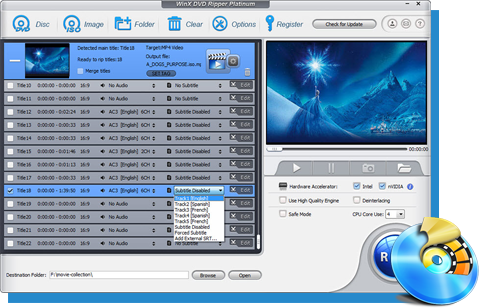
WinX DVD Ripper can convert supported, readable DVDs into digital video files for playback on compatible computers and mobile devices. It may be useful if you want to preserve accessible DVD content or watch it without relying on a standalone DVD player. However, ripping software cannot repair a cracked disc, restore missing data, or fix a faulty optical drive. Conversion results depend on the disc's condition, whether the source can be read, the software's capabilities, and applicable copy-protection restrictions.
Table of Contents
Part 1. Why Your DVD Player Won't Read a Disc
When a DVD player keeps spinning without playing, displays "No Disc," or ejects a disc after attempting to read it, several causes are possible. The error message alone does not identify the failed component. Start by checking how many discs are affected, then use the symptoms below to narrow down the cause.
- Disc problems: The DVD may be inserted incorrectly, dirty, scratched, or damaged. Clean it and check that it sits properly in the tray.
- Compatibility issues: The player may not support the disc's format, recording method, region code, or video standard. Unfinalized recordable DVDs may also fail to play.
- Player faults or settings: Firmware glitches, parental controls, a faulty tray, or a worn optical pickup can prevent playback. If several compatible discs fail, the player may need servicing.
- Connection or environmental issues: An incorrect TV input can cause a blank screen or "No Signal" message. Condensation inside a player may also interrupt playback temporarily.
- Computer or external drive issues: If you're using an external DVD drive, the USB connection, drive, operating system, or playback software may be responsible. See our guide to external DVD drives.
Quick diagnosis: What happens when you insert a DVD?
- Only one disc fails: Inspect it for dirt or damage, then check its recording format and region compatibility.
- Several compatible discs fail: Power-cycle the player and inspect the tray. If the problem persists, an internal reading or mechanical fault becomes more likely.
- The disc spins, then "No Disc" appears: The player may be unable to read the disc. Test a different, known-good DVD that the player supports.
- A "Check Regional Code" or similar message appears: Check the region code and video format before assuming the disc or optical drive is damaged.
- The player reads the disc, but the TV shows no picture: Check the TV input, video cable, and output settings. A display problem is different from a disc-recognition failure.
- The tray clicks, jams, or repeatedly opens: The loading mechanism may be malfunctioning. Do not force the tray closed or attempt to adjust internal parts.
- The issue began after moving the player: If the device moved from a cold environment into a warm room, allow time for possible condensation to dissipate.
Part 2. How to Fix a DVD Player Not Reading or Loading a Disc
The right fix depends on whether the problem comes from the disc, format compatibility, player settings, or hardware. Follow the steps in order and test playback after each relevant change. This avoids unnecessary repairs and helps you identify when professional service is more appropriate.
1. Power-cycle the DVD player.
A temporary electronic glitch may cause a DVD player to stop recognizing discs or display a "No Disc" message. A power cycle is a sensible first step, although it will not fix a damaged disc, an unsupported format, or failed hardware.
- Turn off the DVD player.
- Unplug its power cord from the electrical outlet.
- Wait about one minute, unless the manufacturer's instructions specify a different interval.
- Reconnect the power cord and turn the player on.
- Insert a compatible DVD and check whether the player recognizes it.
If the error returns, continue with the disc and compatibility checks below. If the player repeatedly makes clicking or grinding noises, stop testing it and consider professional service.
2. Check the disc's position, condition, and format.
Make sure the disc is inserted with the playback side facing the correct direction, as specified in the player manual, and sits properly in the tray. If the tray resists movement, do not force it closed.
Inspect the disc under good lighting. Look for fingerprints, smudges, deep scratches, cracks, or warping. To clean a typical DVD, gently wipe the readable surface with a clean, soft, lint-free cloth, moving from the center toward the outer edge. Avoid abrasive cleaners and aggressive polishing. Never insert a cracked disc, as it may break further while spinning.
Next, test the disc in another compatible DVD player or a computer with a DVD drive. If it fails on more than one compatible device, the disc may be damaged, improperly recorded, unfinalized, or unsupported. If it works elsewhere but not in the original player, check the original player's specifications and settings.
Recordable DVDs need particular attention. A player must support the specific recording format, and the recording speed and finalization status may affect playback. Compatibility differs by model, so the tables below should be treated as a reference to the listed media types—not a guarantee that every Sony player or DVD player from another brand supports every format.
| Content | DVD-RW | DVD-R | DVD+RW | DVD+R | DVD-RAM |
|---|---|---|---|---|---|
| Movies | Model-dependent | Model-dependent | Model-dependent | Model-dependent | Model-dependent |
| Music | Check manual | Check manual | Check manual | Check manual | Check manual |
| Still images | Model-dependent | Model-dependent | Model-dependent | Model-dependent | Model-dependent |
Note: Supported content and disc types vary by player model and recording method. Check the manufacturer's specifications before using this table to determine compatibility.
| Content | CD-ROM | CD-R / CD-RW | Super Audio CD |
|---|---|---|---|
| Movies | Not a standard movie-disc format | Model-dependent | Not a standard movie-disc format |
| Music | Check manual | Check manual | Only on compatible players |
| Still images | Model-dependent | Model-dependent | Not generally supported for still images |
Note: This table is a general guide, not a universal compatibility list. Some DVD players support only specific CD formats, while others can read additional media types. Confirm the capabilities of your exact model.
Other disc-format issues to check include:
- DVD-RW discs recorded in Video Recording (VR) mode may require a VR-compatible player.
- Some players cannot read discs recorded in AVCREC or HD Rec formats.
- A disc created on a computer or DVD recorder may need to be finalized before another device can play it.
- Some older players cannot read certain recordable media or recording speeds.
- A DVD may be physically readable but still contain a recording format or video file that the player does not support.
3. Check the loading tray and optical reading mechanism.
Observe the loading tray as it opens and closes. It should move smoothly and close fully. If it sticks, makes grinding sounds, or repeatedly opens by itself, the loading mechanism may need repair. Do not push the tray shut or force a disc into the drive.
If the tray works normally, test two or more known-good discs that the player is designed to support. If they all fail, the optical pickup, laser, spindle motor, or another internal component may be involved. A "No Disc" message does not prove that the lens is dirty or that the laser has failed; it only indicates that the player has not successfully recognized the inserted disc.
For cleaning, follow the manufacturer's maintenance instructions. Some manufacturers do not recommend commercially available lens-cleaning discs for particular players. Do not insert cotton swabs, apply rubbing alcohol to internal components, spray compressed air into the mechanism, or attempt to adjust the laser or servo alignment without proper service instructions. These actions may damage sensitive parts.
If the player repeatedly spins without recognizing multiple compatible discs, or produces unusual clicking or grinding noises, stop using it and contact a qualified repair technician. Internal optical or mechanical faults may require component-level inspection; cleaning alone will not necessarily solve them.
4. Check the connection between the DVD player and TV.
If the player appears to read the disc but the TV shows a blank screen, "No Signal," or an unstable picture, investigate the display connection. This is different from a "No Disc" error shown on the player's display.
- Check that the video cable is firmly connected to both the DVD player and TV.
- Select the TV input that corresponds to the connected HDMI, composite, component, or other video cable.
- If an AV receiver or adapter sits between the devices, make sure it is powered on and set to the correct input.
- If the TV does not support the player's progressive-scan output, consult both manuals and select a compatible video-output setting.
For more details, see our guide on how to connect a DVD player to a TV.
5. Check the DVD's region code and video format.
A DVD can be clean and undamaged but still fail to play because the player does not support its region code or video format. Check the region symbol on the disc or packaging, then compare it with the specifications for your exact player model.
For example, Sony states that its DVD players and recorders sold in the United States support NTSC video and Region 1 discs. They can also play discs labeled Region 0 or All, but the relevant models do not support PAL or SECAM discs or other DVD region codes. This is a Sony-specific example, not a rule that can be applied to every LG, Samsung, Philips, or other player.
Region codes and video standards are separate compatibility checks. A disc may have a region code that the player does not support, or it may use a video standard that the player cannot handle. Some devices offer no user-accessible way to change their region settings, so check the manual before attempting to change a setting or assuming that the restriction can be removed.
If a disc that previously played suddenly triggers a region-code error, verify that the disc is intended for the player's region. If the code matches but the error persists, consult the manufacturer's support documentation. Replacing the laser or cleaning the lens is unlikely to solve a genuine region-code mismatch.
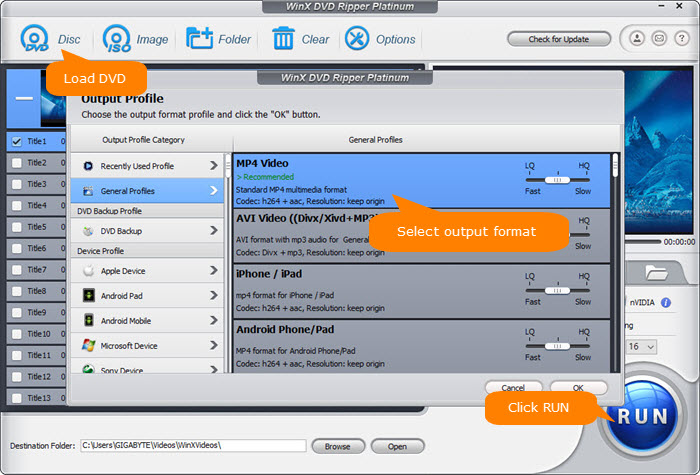
If your computer's DVD drive can still read the disc and you want a digital copy for supported devices, WinX DVD Ripper Platinum is one option to consider. Depending on the source disc and software capabilities, it can offer features such as:
- Converting supported, readable DVD content into digital video files.
- Creating an ISO image or VIDEO_TS folder from compatible sources, where supported.
- Converting DVD video into available output formats such as MP4, MOV, AVI, or WMV.
- Preparing digital files for playback on compatible computers and supported mobile devices.
- Choosing output settings to balance file size, conversion time, and video quality.
- Following a basic workflow: load the DVD, select an output format, and start the conversion.
Conversion depends on whether the optical drive can read the source, the condition and structure of the disc, and the software's supported features. No DVD ripper can physically repair a cracked disc, reconstruct missing data, or fix a faulty standalone DVD player. Copy-protection support also varies, and users should comply with applicable copyright laws and the software's terms of use.
Legal Disclaimer: WinX DVD Ripper is developed by Digiarty Software. Before copying or converting a DVD, check the copyright rules and other applicable laws in your location, along with the software's terms of use. Copy content only when you have the necessary rights or authorization. See our guide to DVD copyright laws and regulations.
6. Check the player's settings and reset it if necessary.
If multiple compatible discs fail but the tray appears to work normally, consult the support page for your exact DVD player model. Check for model-specific troubleshooting instructions or a firmware update, if the manufacturer provides one. Not every DVD player has an available firmware update, and firmware intended for another model should never be installed.
If a power cycle and the other basic checks do not resolve the problem, consider restoring the player to its factory settings. The procedure differs by model, so follow the supplied manual rather than assuming that disconnecting every cable will reset the device.
- Check the manual for a factory-reset option in the settings menu or on the device.
- Follow the manufacturer's instructions to restore the default settings.
- Reconfigure any necessary preferences and test a known-good, compatible DVD.
A factory reset may erase customized settings, and it will not fix a physically damaged disc or a failed optical component. If the same error continues afterward, move on to professional diagnosis rather than repeating the reset.
7. Allow condensation to dissipate before using the player again.
If the player has been moved from a cold location into a warm, humid room, condensation may temporarily form inside it. Turn the player off and allow it to acclimate. Some manufacturer guidance recommends leaving the device unused for approximately 30 minutes to an hour, although the appropriate interval depends on the circumstances and the model.
Do not insert another disc until you have allowed enough time for possible moisture to dissipate. If the player still cannot read compatible discs after the condensation risk has passed, continue with the remaining diagnostic checks.
If none of these steps resolves the problem, a technician may need to inspect the optical pickup, loading tray, spindle motor, or other internal components. Professional repair is particularly worth considering when the device repeatedly clicks, fails to close the tray, or rejects multiple known-good discs. Compare the repair estimate with the cost of replacing the player before deciding how to proceed.
If you would rather watch your DVD collection without relying on a physical player, you can also consider converting readable DVDs to digital files. This is an alternative playback method, not a repair for a damaged disc or defective hardware.
Part 3. FAQs About DVD Players Not Reading Discs
Why does my DVD player keep saying "No Disc" when there is a disc?
The player may not recognize the disc because it is inserted incorrectly, dirty, damaged, or incompatible with the device. A problem with the optical reading mechanism can produce the same message. Reinsert the disc correctly, inspect its surface, and test another known-good DVD that the player supports. If multiple compatible discs trigger the same error, power-cycle the player and consult the manufacturer's troubleshooting instructions. Persistent errors may require professional service.
Why is my DVD drive not reading discs?
On a computer, the cause may be a dirty or scratched disc, an unsupported format, an external drive connection problem, a malfunctioning optical drive, or playback software that cannot handle the disc. Try another compatible disc and check whether the operating system recognizes the drive. If only one disc fails, investigate that disc first. If several known-good discs fail, check the connection, drive status, and relevant software settings before considering hardware repair or replacement.
How do I fix a DVD player that won't read discs?
Start by checking the disc's position and condition, then test another compatible DVD. Power-cycle the player and verify that the disc's recording format and region are supported. If several known-good discs still fail, consult the manual for model-specific reset or firmware instructions. Avoid opening the player or cleaning its internal laser with household tools. If the problem persists, a qualified technician can inspect the optical drive and loading mechanism.
Can a scratched DVD be repaired if the player won't read it?
It depends on the damage. Fingerprints and surface smudges can often be removed with a soft, lint-free cloth, but deep scratches, cracks, and damage to the data layer may make a disc unreadable. Do not use a cracked disc. If a scratched DVD remains readable in a computer's optical drive, you may be able to make a digital backup. Ripping software cannot recover data that the drive cannot read, and it does not physically repair the disc.
How do I fix my CD player not reading discs?
Check that the CD is inserted correctly and inspect it for dirt, scratches, or cracks. Clean the readable surface gently with a soft, lint-free cloth, then try another compatible CD. If the player fails with multiple discs, power-cycle it according to the manual. Use only a cleaning method approved by the manufacturer; avoid inserting cotton swabs or applying rubbing alcohol directly to the internal optical assembly. Continued read errors may indicate a fault that needs professional service.