









Is It Legal to Rip DVDs? Understanding DVD Copyright Laws
 George Williams
Updated on
Owning the DVD does not automatically make every type of copying legal in the U.S. Copyright law treats making a personal copy and bypassing DVD copy protection as separate issues. The Copyright Office’s current DMCA rules include specific, limited exemptions for circumvention, but they do not create a blanket right to rip any DVD you own. If you’re backing up your own discs, the legality can depend on what you copy, how you copy it, and what you do with the resulting files.
Is It Legal to Copy a DVD for Personal Use?
In the U.S., making a copy of a DVD you legally own for personal backup is not automatically illegal, but the situation is more complicated than simply saying “yes.” Copyright law gives copyright owners exclusive rights over reproduction, while fair use may permit some unlicensed copying depending on the circumstances. There is no broad rule that guarantees you can copy any DVD just because you bought it.
There is another issue with commercial DVDs: copy protection. Under the Digital Millennium Copyright Act (DMCA), bypassing a technological protection measure can raise separate legal concerns, even when the underlying copying might otherwise have a fair-use argument. The law also provides specific exemptions that change over time, so an exemption should not be treated as a general permission to remove DVD encryption.
For a personal DVD backup, the safest approach is to consider three things: whether you have lawful access to the disc, whether the copy stays strictly for your own use, and whether making it requires bypassing copy protection. Sharing the ripped files, uploading them, selling copies, or distributing them to others is a very different situation and can create clear copyright problems.
Bottom line: Owning a DVD does not automatically give you unlimited copying rights. Personal backup, fair use, and bypassing DVD protection involve different legal questions, so check the rules that apply to your specific situation.
Does Owning the DVD Mean You Can Rip It?
Not necessarily. Buying a DVD gives you ownership of that physical disc, but it does not transfer the copyright in the movie or automatically grant unlimited copying rights. Whether you can legally rip it depends on how the copy is made and what you intend to do with it.
- Personal backup: Making a copy for your own use may be treated differently from copying a DVD for distribution. However, U.S. law does not provide a blanket rule that makes every personal DVD rip legal.
- Copy-protected DVDs: Many commercial DVDs use encryption or other access controls. Circumventing those protections raises a separate issue under the DMCA, even when you own the physical disc.
- Sharing the rip: Uploading, selling, lending digital copies, or distributing ripped files to others can create copyright issues regardless of whether you purchased the original DVD.
- DVDs you do not own: Ripping borrowed, rented, or otherwise accessed DVDs can involve additional legal concerns, particularly when the copy is retained after the original access ends.
The key point: Owning the disc is only one part of the legal picture. Before ripping a DVD, consider both your intended use and whether the process requires you to bypass its copy protection.
DVD Ripping Laws Around the World (US, UK, Canada, Europe)
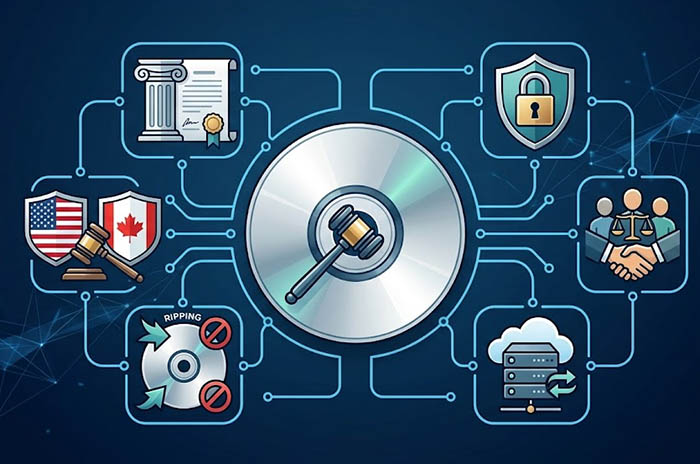
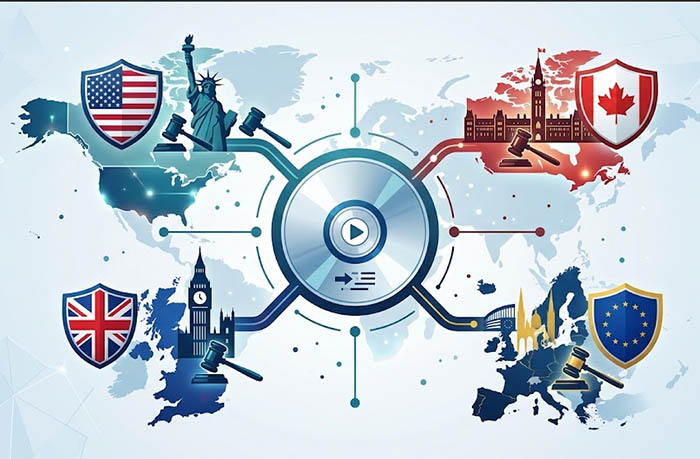
Whether you can legally rip a DVD depends on where you live, whether you legally obtained the disc, what you do with the copy, and whether the ripping process bypasses copy protection. Owning a DVD does not automatically give you unrestricted rights to duplicate its copyrighted content. Here is how the rules generally differ across major regions.
1. United States
U.S. copyright law gives copyright owners exclusive rights to reproduce their works, while the DMCA separately restricts circumvention of technological measures that control access to copyrighted content. The U.S. Copyright Office can create limited, temporary exemptions to this anti-circumvention rule, but these exemptions apply only to specific uses and types of works rather than creating a general right to rip any DVD you own.
For that reason, a personal DVD backup and bypassing the encryption on a commercial DVD should not be treated as the same legal question. A copy that stays on your own devices is also very different from sharing or distributing the ripped movie.
2. United Kingdom
The UK briefly introduced a private-copying exception in 2014 that would have allowed individuals to make personal copies of lawfully acquired works, including DVDs. However, the High Court quashed that exception in 2015. The UK Intellectual Property Office also states that technological protection measures used by media such as DVDs are legally protected and that circumventing them is illegal.
As a result, you should not assume that buying a DVD gives you a general right to rip it for personal use in the UK. Copying and bypassing DVD protection can raise separate legal issues.
3. Canada
Canada provides specific exceptions for certain private and backup copies. The Copyright Act allows an individual to reproduce a legally obtained copy for private purposes or solely as a backup, provided the statutory conditions are met. However, those provisions specifically exclude copies made by circumventing a technological protection measure.
This means that owning the DVD and keeping the copy private are not, by themselves, enough to make every DVD rip lawful. If making the copy requires bypassing a technological protection measure, the situation changes.
4. Australia
Australian copyright law provides specific exceptions for certain uses of copyrighted material, but it does not establish a broad personal-copying right that automatically covers every movie DVD. The Attorney-General's Department explains that copyright owners generally control reproduction of films and that copying without permission is lawful only where permission or a relevant statutory exception applies.
Therefore, owning a DVD does not automatically mean you can make any digital copy you want. The purpose of the copy and the particular copyright exception being relied upon matter.
5. European Union
There is no single EU-wide rule that simply makes all DVD ripping legal or illegal for personal use. EU copyright law allows member states to provide a private-copying exception, but national laws determine how that exception works and what conditions apply. Technological protection measures are also subject to legal protection, so making a personal copy and circumventing DVD copy protection are separate issues.
This distinction is important when comparing European countries: a private-copying exception in one member state does not necessarily mean that bypassing a protected DVD is permitted there. Check the copyright and anti-circumvention rules of the specific EU country where you are making the copy.
6. Japan
Japan allows certain reproductions for private or family use, but its Copyright Act specifically excludes cases where reproduction becomes possible through the circumvention of technological protection measures. In other words, the private-use exception does not provide a blanket right to bypass DVD copy protection.
For DVD owners in Japan, the distinction between making a private copy and circumventing a protection measure is therefore particularly important.
What Does This Mean for DVD Owners?
- Owning the physical DVD is only one factor. It does not automatically transfer the copyright in the movie or give you unlimited copying rights.
- Personal use does not mean the same thing everywhere. Some countries provide private-copying or backup exceptions, while others impose stricter conditions.
- Copy protection matters. A law that permits certain private copies may still prohibit bypassing a technological protection measure.
- Sharing is a different issue. Uploading or distributing a ripped movie can create copyright problems even where a limited personal-copying exception exists.
Bottom line: There is no worldwide "DVD ripping is legal" rule. Before making a digital copy, check the laws of your country and distinguish between the right to make a private copy and the separate question of whether you may bypass the DVD's copy protection.
How DRM Protection and CSS Encryption Affect DVD Ripping
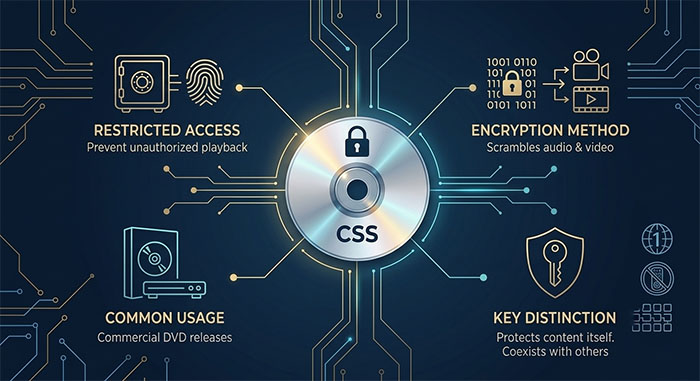
One reason a DVD that plays normally can still be difficult to rip is copy protection. Commercial DVDs may use technologies such as CSS (Content Scramble System) and other access-control or copy-protection mechanisms. These protections are designed to restrict unauthorized access or copying, so a standard file-copy operation may not be enough to extract the movie.
CSS Encryption: Why a DVD May Not Copy Like a Normal Disc
CSS scrambles certain content on a DVD and relies on keys and licensed playback mechanisms to make the protected video accessible to compatible DVD players and software. As a result, copying the visible files from a protected disc does not necessarily produce a usable movie file. A ripping application needs to properly read the DVD structure and copy the protected DVD before it can extract the video.
DRM and DVD Copy Protection Can Create Different Problems
DVD protection is not limited to CSS. A disc may contain additional mechanisms that make its structure more complicated, such as deliberately confusing title information, multiple playlists, or other forms of copy control. This can lead to familiar problems: the wrong title is selected, a rip stops partway through, the output contains only part of the movie, or the software cannot recognize the disc correctly.
That is why a DVD that works perfectly in a standalone player may still fail during ripping. Playback software is designed to read the disc for viewing, while ripping software must identify and extract the underlying video data.
What This Means When Ripping Your Own DVDs
- Unprotected DVDs: They are generally easier to copy or convert because no copy-protection mechanism needs to be handled.
- CSS-protected DVDs: The ripping software must be able to properly read the protected DVD structure rather than simply copying files from the disc.
- More complicated protection: Some commercial DVDs may contain additional structural tricks that can make title detection and extraction more difficult.
- Legal considerations: The technical ability to bypass DVD protection does not automatically mean that doing so is legal. Anti-circumvention rules vary by country, so check the laws that apply where you live.
In short, DRM and CSS can affect both whether a DVD can be ripped successfully and what legal issues may arise during the process. If a disc plays normally but repeatedly fails to rip, its copy-protection scheme or unusual DVD structure may be part of the reason.
Understanding the DMCA and DVD Ripping Laws Explained
In the United States, DVD ripping can involve two separate copyright questions: making a copy of the movie and circumventing the technology that controls access to it. The Digital Millennium Copyright Act (DMCA) addresses both areas, but the rules are not as simple as “ripping your own DVD is legal” or “ripping is always illegal.”
How the DMCA Affects DVD Ripping
Section 1201 of the DMCA generally prohibits circumventing a technological measure that effectively controls access to a copyrighted work. Commercial DVDs commonly use copy-protection technologies, so using software to bypass that protection can raise a separate anti-circumvention issue even when you legally purchased the physical disc.
At the same time, the DMCA provides a rulemaking process through which the Librarian of Congress can create limited exemptions to the anti-circumvention prohibition. These exemptions are specific to particular classes of works and uses and are reviewed periodically. They should not be interpreted as a blanket permission to remove protection from any DVD for any purpose.
What About Ripping a DVD You Own?
Ownership of the physical disc does not automatically settle the legal question. A person may have a legitimate reason to make a personal backup, but that does not necessarily provide an independent exemption from the DMCA's anti-circumvention rules. The legality can depend on the type of copyrighted work, the purpose of the copy, the protection involved, and whether a current exemption applies.
There is also an important difference between ripping for personal use and distributing the resulting files. Uploading a ripped movie, sharing it through a torrent, selling copies, or making it available to others can create copyright infringement issues regardless of whether you own the original DVD.
Key takeaway: The DMCA makes DVD ripping more complicated than simply asking whether you own the disc. In the U.S., consider the copyright rules governing the copy separately from the anti-circumvention rules governing DVD protection, and check the current DMCA exemptions before relying on a personal-use argument.
 FAQs About DVD Copyright Laws
It depends on where you live and how the DVD is protected. Owning the physical disc does not automatically give you unlimited rights to copy its copyrighted content. In the U.S., for example, bypassing technological protection on a commercial DVD can raise separate issues under the DMCA, even when the disc belongs to you.
There is no single worldwide answer. Some countries recognize private-copying or backup exceptions under specific conditions, while others impose stricter limits. You also need to distinguish between making a personal copy and bypassing the DVD's copy protection.
Copy protection can change the legal situation. Technologies such as CSS and other access controls may be protected by anti-circumvention laws. A private-copying exception does not necessarily give you permission to bypass those protections, so the rules depend on your country and the specific use.
Not automatically. Fair use concerns whether a particular use of copyrighted material is lawful, while anti-circumvention rules can separately restrict bypassing technological protection. In the U.S., you should not assume that a fair-use purpose automatically permits you to defeat DVD encryption.
Sharing a ripped movie is very different from keeping a copy for yourself. Uploading, selling, distributing, or making copyrighted DVD content available to other people can infringe the copyright owner's rights, even when you legally purchased the original disc.
The rules differ by country. Canada has specific private-copying and backup provisions subject to conditions, while the UK does not currently have a general private-copying exception for making personal copies of copyrighted works. Australia also has specific copyright exceptions rather than a blanket right to copy any commercial DVD you own.
Not necessarily. Buying a DVD gives you ownership of the physical disc, but copyright remains with the copyright owner. Whether you can make a backup depends on your country's copyright exceptions, the purpose of the copy, and whether making it requires you to bypass copy protection.


 Free Download
 Free Download