









DVD-R vs DVD+R: Which Is Better for Movies & Data?
 Donna Peng
Updated on
Confused about DVD-R vs DVD+R and which one is better for your needs? Although both are write-once, 4.7GB recordable formats, their compatibility, recording features, and ideal use cases can differ. This guide breaks down the key differences, explains how each format performs with older and modern DVD players, and helps you choose the right disc for movies, data, or ISO burning.
DVD-R vs DVD+R: Quick Answer
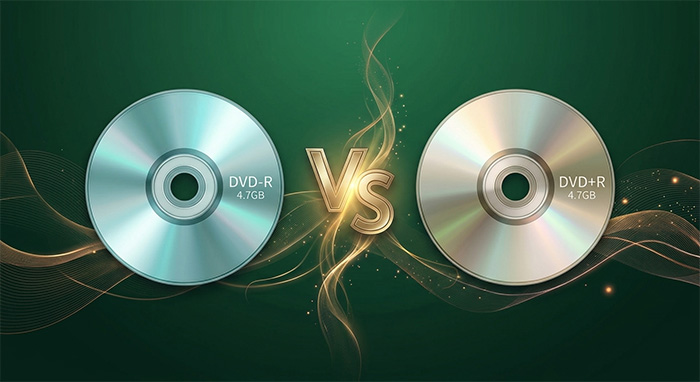
DVD-R and DVD+R are both write-once recordable DVD formats, typically offering 4.7GB of storage on a single-layer disc, but they use different recording standards and have some differences in compatibility and recording features. DVD-R has traditionally been a solid choice for DVD-Video and older standalone DVD players, while DVD+R offers features such as Book Type/bitsetting on supported burners that can improve compatibility in certain situations.
| Key Point | DVD-R | DVD+R |
|---|---|---|
| Capacity | Typically up to 4.7GB for single-layer discs | Typically up to 4.7GB for single-layer discs |
| Recording | Write once; cannot be erased and reused | Write once; cannot be erased and reused |
| Compatibility | Often a safe choice for older standalone DVD players | Widely supported by modern DVD players and drives |
| Book Type / Bitsetting | Does not offer the same +R bitsetting advantage | Supported by some compatible DVD burners |
| DVD-Video | Suitable for creating DVD-Video discs | Suitable for creating DVD-Video discs |
| Data / ISO | Suitable for data and compatible ISO images | Suitable for data and compatible ISO images |
| Best For | Older players or uncertain playback compatibility | Modern hardware or burners with Book Type support |
Which is better? If you are burning a disc for an older DVD player or are unsure about playback compatibility, DVD-R is often the more conservative choice. If your burner supports Book Type/bitsetting or you mainly use modern hardware, DVD+R can be equally suitable. Your burner, playback device, and intended use matter more than the “-” or “+” label alone.
What Are DVD-R and DVD+R?
DVD-R and DVD+R may look almost identical on the surface, but the two formats come from different technical standards and were developed with different approaches to recordable DVD media. Both are write-once discs with a typical single-layer capacity of 4.7GB, yet their history helps explain why both formats remain in use.
What Is DVD-R?
DVD-R (DVD Recordable) is a write-once optical disc format developed under the DVD Forum standard. A blank DVD-R can be recorded once, after which the stored data cannot be erased and the disc cannot be reused for another recording. A standard single-layer DVD-R is commonly referred to as DVD-5 and provides up to 4.7GB of storage.
DVD-R became widely adopted for recording DVD-Video, data, photos, and other files, particularly during the earlier years of consumer DVD hardware. Its close relationship with the DVD Forum specifications and broad support among standalone DVD players helped make it a familiar choice for video disc creation. This history is also why DVD-R is often considered when compatibility with older DVD players is a priority.
What Is DVD+R?
DVD+R (DVD+Recordable) is also a write-once optical disc format, with a typical single-layer capacity of up to 4.7GB. Unlike DVD-R, however, DVD+R was developed through the DVD+RW Alliance, a group of companies that promoted the DVD+ recording format as an alternative to the DVD Forum's DVD- recording standards.
DVD+R uses a different recording approach from DVD-R and introduced several features designed to provide greater flexibility during disc recording. One notable example is Book Type or bitsetting, which some compatible DVD burners can use to identify a DVD+R disc as DVD-ROM. Depending on the playback hardware, this can help improve compatibility in situations where a standalone player is selective about recordable media.
Why Are There Both DVD-R and DVD+R?
The existence of DVD-R and DVD+R is largely the result of two competing standards rather than two versions of the same format. DVD-R developed under the DVD Forum, while DVD+R emerged from the DVD+RW Alliance. Each group promoted its own technical approach to recordable DVDs, and neither format completely displaced the other.
Instead, both standards gained support from different manufacturers, burners, media brands, and playback devices. As DVD hardware evolved, many drives began supporting both formats, making the distinction less important for everyday use. Even so, the two formats have retained differences in recording technology and features, which can still matter when you're burning discs for older DVD players or using a burner with specific media support.
In practical terms, DVD-R and DVD+R are not simply “old” and “new” versions of the same disc. They are competing recordable DVD standards that eventually became widely supported by the same hardware. Understanding that distinction makes it easier to evaluate their compatibility and choose the right format for a particular burning task.

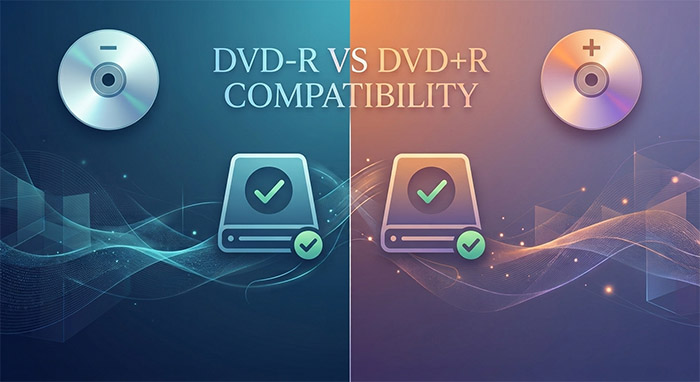
DVD-R vs DVD+R Compatibility: Which Plays on More Devices?
Compatibility is where the DVD-R vs DVD+R debate becomes practical. A disc that burns successfully on one computer may not play correctly in an older standalone DVD player. The format itself matters, but so do the age and specifications of the playback device, the disc media, the burning process, and whether the disc was properly finalized.
DVD Player Compatibility
Older standalone DVD players can be more selective about recordable media than modern equipment. DVD-R has a long history of support in DVD-Video applications, so it is often a sensible first choice when you're creating a disc for an older player. That does not mean every old player will reject DVD+R, however. Some models support both formats, while others may only list one type in their specifications.
For newer DVD players, the distinction is usually much less significant. Many models were designed to handle both DVD-R and DVD+R, provided the disc was recorded in a compatible format and finalized correctly.
Before burning a batch of discs, check the logos or media specifications printed in the player's manual. Common markings include:
- DVD-R / DVD-RW: The player supports the DVD- family of recordable and rewritable media.
- DVD+R / DVD+RW: The player supports the DVD+ family.
- DVD±R / DVD±RW: The device is designed to support both DVD-R/DVD-RW and DVD+R/DVD+RW.
Keep in mind that a supported disc format does not guarantee playback. The way the DVD was authored, the recording quality, finalization status, and the condition of the media can also affect whether a player recognizes it.
Computer DVD Drives
Computer optical drives generally offer broader format support than older standalone players. A modern internal DVD drive, laptop optical drive, or external USB DVD drive will often read both DVD-R and DVD+R. If the drive is also a burner, its specifications will usually indicate which recordable formats it can write.
That distinction is important: a DVD player and a computer DVD drive do not face exactly the same compatibility requirements. A PC drive may successfully read a DVD+R that an older living-room DVD player cannot recognize. Likewise, a drive may read a format but not support writing to it.
When checking a computer's capabilities, look separately for:
- Read support: Whether the drive can read DVD-R or DVD+R discs.
- Write support: Whether the burner can record to that particular media type.
- Dual-layer support: Whether it can handle DVD-R DL or DVD+R DL when more than 4.7GB is needed.
- Media compatibility: Whether the specific blank disc and recording speed are supported by the burner.
Old DVD Players vs Modern DVD Players
The simplest rule of thumb is useful, but it should not be treated as an absolute compatibility guarantee:
- Older DVD player → DVD-R is often the safer starting point, especially when the manufacturer's specifications are unclear.
- Modern DVD player → DVD-R and DVD+R are usually both viable, assuming the player lists support for the respective format.
- Unknown playback device → Check the manual first rather than buying a large quantity of one format based solely on general compatibility claims.
In other words, there is no universal winner in the DVD-R vs DVD+R compatibility question. For legacy hardware, DVD-R can offer a practical compatibility advantage; with newer drives, the difference often disappears. If a disc still fails to play, investigate the authoring method, finalization, burning quality, and media condition instead of assuming the “+” or “-” format is solely responsible.
DVD-R vs DVD+R: Speed, Capacity, and Quality
Capacity, burning speed, and video quality are often used to decide between DVD-R and DVD+R, but the “+” format does not automatically mean faster, larger, or better. In practice, the blank disc itself, your optical drive, recording settings, and the quality of the source material can have a greater impact on the final result.
Capacity: DVD-R vs DVD+R
For standard single-layer media, DVD-R and DVD+R offer essentially the same DVD storage capacity: up to 4.7GB. This type of disc is commonly called DVD-5. Since both formats provide roughly the same usable space, switching from DVD-R to DVD+R will not give you more room for the same type of content.
For larger projects, both formats are also available in dual-layer versions. A DVD-9 can hold approximately 8.5GB, giving you considerably more space than a single-layer disc. The corresponding media types include DVD-R DL and DVD+R DL. However, dual-layer support depends on the burner, playback device, disc media, and recording software, so compatibility should be confirmed before burning.
- DVD-5: Single-layer disc with a typical capacity of up to 4.7GB.
- DVD-9: Dual-layer disc with a typical capacity of about 8.5GB.
- DVD-R DL: Dual-layer recordable media using the DVD- standard.
- DVD+R DL: Dual-layer recordable media using the DVD+ standard.
Burning Speed: Is DVD+R Faster?
Not necessarily. The DVD+R label does not make a disc inherently faster to burn than DVD-R. Actual recording speed depends on the combination of blank media, DVD burner, supported write strategy, firmware, and selected recording speed.
For example, a high-quality DVD-R may burn faster and more reliably on a particular drive than a lower-quality DVD+R, while another burner may produce the opposite result. The maximum speed printed on the disc is also not a guarantee that your drive will use that speed throughout the entire recording process.
If burning speed matters, check whether the media's rated speed matches your burner's supported speeds rather than choosing a format based only on “-R” or “+R.” A stable burn at a supported speed is generally more useful than simply selecting the highest number available.
Video Quality: Is DVD-R or DVD+R Better?
Neither DVD-R nor DVD+R inherently provides better picture quality. The format determines how the data is recorded on the disc, not how sharp or detailed the original video looks. When the same source video is encoded with identical settings and written correctly, changing from DVD-R to DVD+R does not by itself improve resolution, color, or audio quality.
For a DVD-Video project, factors such as the original source, video bitrate, encoding settings, compression level, and authoring process have a much greater effect on what you see on screen. If a burned DVD looks noticeably worse than the source, changing from DVD-R to DVD+R is unlikely to solve the underlying problem.
Durability and Longevity: Which Lasts Longer?
There is no reliable rule that DVD-R always lasts longer than DVD+R, or vice versa. Long-term readability depends on much more than the format designation. The quality of the blank media, manufacturing consistency, recording quality, storage conditions, and physical handling can all influence how well a disc holds up over time.
- Media quality: Higher-quality discs generally offer more consistent recording and are less prone to degradation.
- Manufacturer: Manufacturing quality and quality control can vary between media brands and production batches.
- Dye and recording layer: The materials used in the disc's recording layer can affect how its data layer ages.
- Burn quality: A clean, well-recorded disc is less likely to develop reading problems than one burned poorly.
- Storage environment: Excessive heat, humidity, direct sunlight, and rapid environmental changes can accelerate disc degradation.
- Physical condition: Scratches, fingerprints, cracks, and surface damage can make an otherwise healthy disc difficult to read.
For important files, neither DVD-R nor DVD+R should be treated as an indestructible archive. Keep valuable data in more than one location and store optical discs in a cool, dry, dark environment. In short, disc quality and storage practices matter more for longevity than whether the label says DVD-R or DVD+R.

DVD-R vs DVD+R: Which One Should You Buy?
Choosing between DVD-R and DVD+R usually depends more on the equipment and task than on storage capacity or video quality. Both formats work for common data and DVD-Video projects, but playback compatibility and burner features can make one a better fit for a particular setup.
For older DVD players: DVD-R is often the safer starting point. It has a long history of support across standalone DVD-Video hardware, making it a practical choice when you're unsure which recordable format an older player will recognize. The player's manual remains the best reference, especially when it specifically lists DVD-R or DVD-RW support.
For burners with Book Type support: DVD+R offers an extra layer of flexibility. Compatible burners can use Book Type/bitsetting to identify a DVD+R disc as DVD-ROM, which may improve compatibility with certain playback devices. DVD+R is also well suited to everyday data storage when the burner and target device support the format.
For modern hardware that supports both: There is usually little practical difference between DVD-R and DVD+R. Either format can store data, photos, videos, and compatible ISO images, as well as create DVD-Video discs. At that point, media quality, price, burner support, and the intended playback device are more useful deciding factors than the “+” or “-” designation.
| Your Situation | Practical Choice | Why |
|---|---|---|
| Older standalone DVD player | DVD-R | Often a safer starting point for legacy compatibility. |
| DVD-Video for older equipment | DVD-R | Has a long history of use with standalone DVD-Video players. |
| Burner supports Book Type | DVD+R | Provides access to bitsetting on compatible drives. |
| Modern computer or DVD player | Either | Many newer drives support both recordable DVD standards. |
| General data or ISO burning | Either | Both formats offer suitable write-once storage. |
| Unsure about an older device | Check the manual first | Device-specific support is more reliable than general format claims. |
The bottom line: DVD-R is generally the more conservative pick for older DVD players, while DVD+R becomes attractive when your burner supports Book Type or when you're working with modern hardware. For equipment that supports both formats, either one can do the job well. Rather than assuming one format is universally superior, match the disc to the burner and playback device you actually plan to use.
Frequently Asked Questions
DVD-R and DVD+R are both write-once DVD formats with a typical single-layer capacity of 4.7GB, but they use different recording standards and technologies. DVD-R has a long history of compatibility with standalone DVD players, while DVD+R offers features such as Book Type/bitsetting on supported burners. For modern hardware, both formats are often supported, so the better choice depends on the burner and playback device.
Both DVD-R and DVD+R can be used to create DVD-Video discs. For an older standalone DVD player, DVD-R is often a practical choice because of its broad history of compatibility. With newer players that support both formats, either can work well. The disc format itself does not determine video quality; encoding settings, bitrate, source quality, and the authoring process have a much greater effect.
DVD-R can be the safer option for some older standalone DVD players, but it is not universally more compatible than DVD+R. Many modern DVD players and computer drives support both formats. Compatibility also depends on the specific player, burner, blank media, recording method, and whether the disc was properly finalized. Checking the device manual is more reliable than assuming one format always works.
Book Type, also called bitsetting, is a feature supported by some DVD burners that can change how a DVD+R disc identifies its physical format. A compatible burner may set the Book Type to DVD-ROM, which can help certain older or selective playback devices recognize the disc more easily. It is not available on every burner and does not guarantee compatibility with every DVD player.
Yes. Standard single-layer DVD-R and DVD+R discs typically hold up to 4.7GB and are commonly known as DVD-5 media. Both formats also have dual-layer versions, including DVD-R DL and DVD+R DL, which provide about 8.5GB of capacity. Actual usable space can vary slightly depending on how the disc is formatted and the recording software being used.
No. DVD-R and DVD+R are write-once formats, so recorded data cannot simply be erased and the disc reused. If you need rewritable media, DVD-RW and DVD+RW are designed for that purpose. A write-once disc may allow additional sessions in some recording workflows before finalization, but that is different from erasing existing content and starting over.
Neither format inherently produces better video quality. DVD-R and DVD+R are simply different ways of recording data onto a write-once disc. When the same video is encoded with identical settings and burned correctly, changing between the two formats does not automatically improve resolution, color, audio, or overall picture quality. Source quality, bitrate, compression, and encoding settings matter much more.
A DVD may fail to play for several reasons. The player may not support the disc format, the disc may not have been finalized, or the content may not have been authored as a compatible DVD-Video disc. Poor-quality media, an unsuitable burning speed, physical disc damage, or an aging optical drive can also cause playback problems. If the player supports DVD+R but not DVD-R, or vice versa, using the supported format may resolve the issue.
Either format can work well for ordinary data storage. Since standard DVD-R and DVD+R discs offer similar single-layer capacity, the more important considerations are your burner's supported media, disc quality, price, and the device that will read the disc later. For important files, keep additional copies rather than relying on a single optical disc as your only backup.
DVD-R is often the more conservative choice for older DVD players, while DVD+R can be attractive when your burner supports Book Type/bitsetting. For modern equipment that supports both formats, either one is generally suitable. Before buying in bulk, check the specifications of the DVD burner and playback device, then choose compatible, good-quality media rather than relying solely on the DVD-R or DVD+R label.
External Sources:
1. ISO — DVD-R Recordable Disk Standard : The International Organization for Standardization documents the physical, optical, recording, and data-format characteristics of DVD-R media, providing a technical reference for how DVD-R discs are structured and recorded.
2. Sony Support — What Types of Discs Can Be Played on a DVD Player? : Sony's support documentation lists DVD-R, DVD+R, DVD-RW, and DVD+RW among supported disc types on compatible DVD players and notes that playback requirements can vary by model and disc format.
3. Sony Support — Disc Compatibility on Blu-ray Disc Players : This reference shows that compatible Blu-ray Disc players can also support DVD-R and DVD+R media, illustrating how playback support varies by device rather than being determined solely by the DVD-R or DVD+R format.
4. ISO — DVD-Recordable Disk Specifications : ISO's DVD-recordable documentation describes the physical and optical characteristics of recordable DVD media and the recording methods used to support data interchange between compatible systems.
5. Microsoft Learn — DVD+RW Drive Feature Support : Microsoft's optical-drive documentation provides a technical reference for how Windows identifies and reports DVD+ media capabilities through the Multimedia Command Set, helping distinguish drive support from playback compatibility.


 Free Download
 Free Download