









[Full Info] DVD Region Codes, DVD Hacks, Unlock DVD Regions
 Mike Rule
Updated on
You may have discovered that you are unable to play foreign DVDs that you brought on your trip abroad. This is because the DVDs are protected by different region codes to specify the area where they can be played. For instance, you can't play a Region-2 DVD from the UK in the US or vice versa. DVDs in different areas are encoded with different region codes, and discs without region coding (all region or region 0 discs) can be played anywhere. In this post, we're going to learn all the details about DVD region codes, Blu-ray regions, and how to make a DVD region free.
What are DVD Region Codes
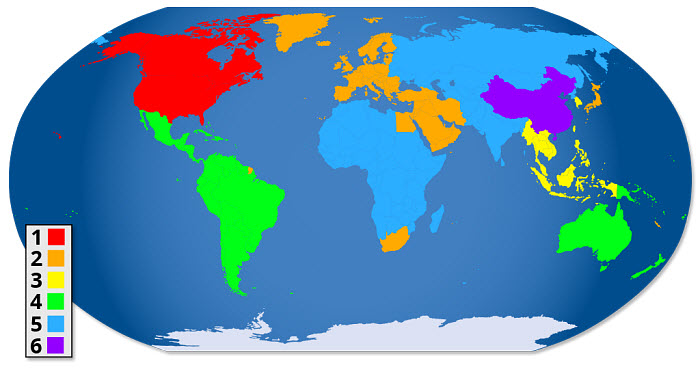
DVD region codes are digital DVD copy protection restrictions built into most commercial DVDs to control where and how a disc can be played. Each disc is assigned a specific region, such as the United States, Europe, or Asia, and it is designed to only work with DVD players sold in that same region. This system was originally introduced to manage distribution timing and pricing across different markets.
Region coding often becomes a limitation for users who travel, import movies, or try to play DVDs on devices from another country. When a mismatch occurs, the disc may not load at all or display an error message, even though the content itself is fully readable. This is why many users look for ways to remove region restrictions or convert DVDs into region-free formats for more flexible playback and ripping.
Why DVD Region Codes Exist
Why are DVDs coded for different regions? The short answer is "money".
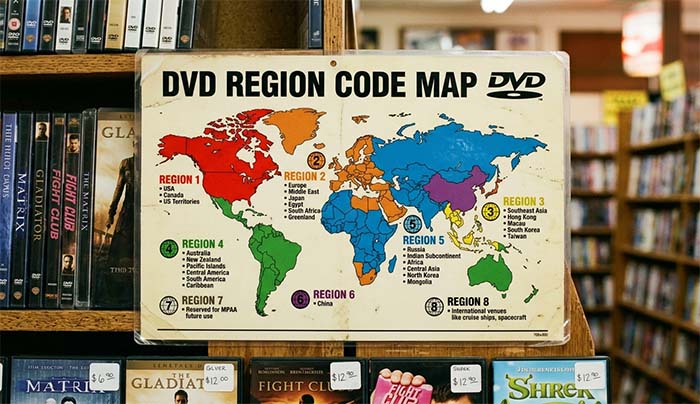
Typically, movies are distributed in different areas at different times. Normally, a movie will be released in the U.S. first, and months later in Australia and other countries. In other words, the DVD version may be released in the U.S. while the same movie is still being shown in theaters. Considering the price differences across different markets, if there are no DVD region codes, people may buy a cheaper version from another region, which will hurt the profit of the film producer. The DVD regions can guarantee the greatest possible return on the movie investment.
DVD Region Code Chart (Region 1–6 Overview)
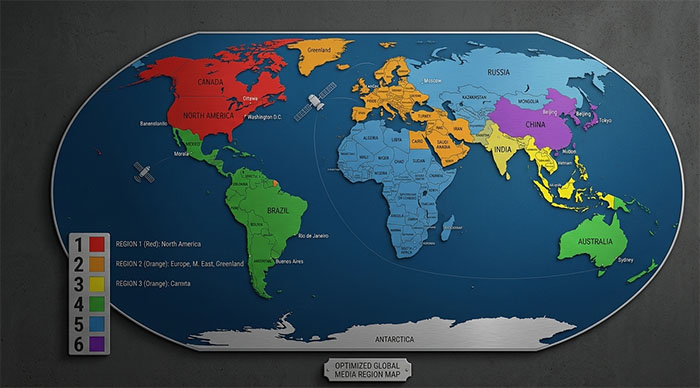
DVD region codes divide the world into different playback zones. Each disc is locked to a specific region, which means it can only be played on compatible DVD players sold in that market. The table below gives a clearer breakdown of each region, including coverage, typical usage, and common playback issues users may encounter.
| Region | Covered Areas | Typical Market | Playback Notes |
|---|---|---|---|
| Region 1 | United States, Canada, U.S. territories | North American releases | Most imported discs from Amazon US |
| Region 2 | Europe (UK included), Japan, South Africa, Middle East, Greenland | EU & Japan distribution | Common region mismatch for US users |
| Region 3 | South East Asia, East Asia (including Hong Kong) | Asian retail market | Often bundled with local subtitles |
| Region 4 | Australia, New Zealand, Pacific Islands, Central & South America, Mexico, Caribbean | Oceania & LATAM releases | Mixed compatibility across devices |
| Region 5 | Eastern Europe, Russia, India, Africa, North Korea, Mongolia | Emerging markets distribution | Older discs may have stronger encryption |
| Region 6 | China | Mainland China releases | Strict regional locking on most discs |
Beyond Region 1–6, some DVDs are marked as Region 0 or Region ALL, meaning they can be played worldwide without restriction. There are also reserved regions (7 and 8), which are rarely used for commercial releases.
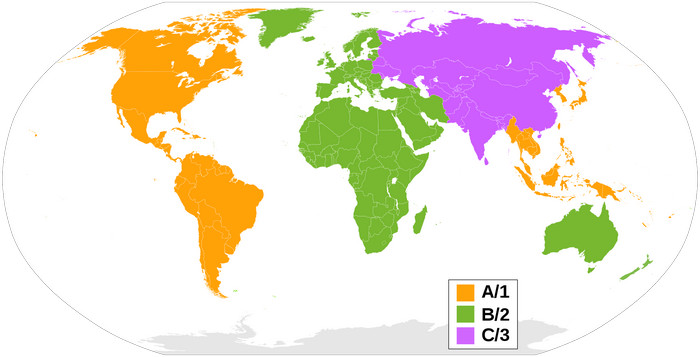
Blu-ray discs use a different system (A, B, C). Region A covers the Americas and parts of Asia, Region B includes Europe, Africa, and Oceania, while Region C is mainly used for China, Russia, and parts of Central and South Asia. Some discs are also labeled ABC (region-free), allowing global playback.
Blu-ray regions:
- A/1 - North, Central, and South America, East and Southeast Asia
- B/2 - Africa, Europe, Oceania, the Middle East, Netherlands, British overseas territories, French territories, Greenland
- C/3 - Central and South Asia, Mongolia, Russia, and the People's Republic of China
- ABC/FREE - Worldwide
How to Find a DVD's Region
Before playing or ripping a DVD, knowing its region code helps avoid compatibility issues and playback errors. DVDs are usually locked to specific regions, and mismatches between the disc and player can prevent access. You can identify the region of a DVD using the following methods:
- Check the packaging or disc: Look for a small globe icon with a number (1–6) printed on the case or disc surface.
- Look for Region 0 or ALL: These indicate the disc is region-free and can be played worldwide.
- Use DVD info tools: Software like Drive Region Info, DVDInfoPro, or Nero InfoTool can detect the region code directly.
- Check media players: Players like WinDVD or PowerDVD may display region details in settings or disc info.
- Notice playback errors: Region mismatch messages usually indicate incompatible region settings.
If the region is not clearly labeled, using software tools is the most reliable way to confirm it before playback or ripping.
Common DVD Region Code Errors and What They Actually Mean
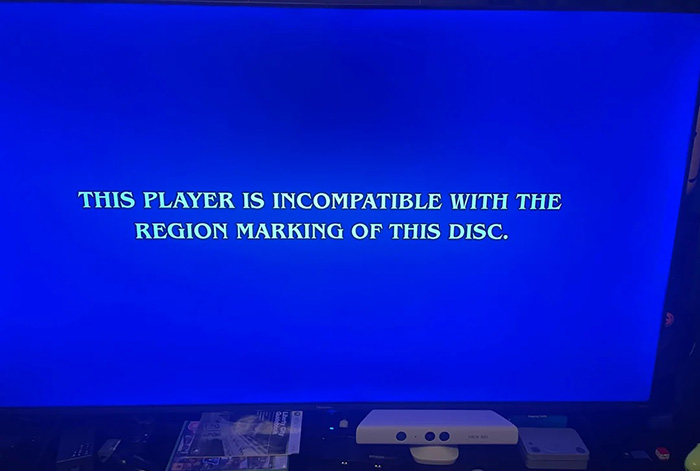
A DVD region problem does not always appear as a message saying exactly “Region Code Error.” Depending on the player or software, you may see "Wrong Region," "Wrong Disc," “Playback is not authorized in your region,” or a similar warning. Before trying to unlock the player, check whether the error is really caused by a region mismatch.
Wrong Region or Playback Is Not Authorized in Your Region
This is the most straightforward region-code problem. The DVD and the player are likely set to different regions. Check the globe symbol and number on the DVD case, then compare it with the region supported by your DVD player or computer drive. A Region 2 DVD, for example, may not play on a Region 1-only player.
The Disc Says Wrong Disc, but the Region Looks Correct
Don't assume the region code is automatically the problem. The real issue may be disc compatibility, a damaged disc, or a PAL/NTSC format mismatch. A player can sometimes reject a foreign-format DVD even when the region restriction has been removed.
A Region-Free Player Still Won't Play the DVD
Region-free playback and video-format compatibility are two different things. Unlocking DVD regions does not automatically add PAL-to-NTSC conversion or support every disc format. Some protected DVDs may also behave differently on players set to an all-region mode.
Area Code and Region Code Are Not Always the Same Setting
This causes plenty of confusion, especially on Blu-ray and home-theater players. DVD regions use numbers, while Blu-ray regions use letters. Menu options related to parental ratings or geographic settings may also be called “area codes,” but changing them usually does not unlock DVD playback.
Quick tip: If only one DVD fails, test another disc before changing your player's region settings. If several DVDs from the same foreign region fail while local discs work normally, a genuine region mismatch becomes much more likely.
 FAQ about DVD Region Codes
This is usually caused by a region mismatch. If your DVD and player are set to different regions, playback will be blocked or show an error message.
You can find the region code on the disc case or printed on the DVD itself, usually shown as a small globe icon with a number (1–6). Software tools can also detect it.
Region 2 DVDs are designed for Europe, Japan, and the Middle East. They won’t play on a standard US (Region 1) player unless you use a region-free DVD player or change the player’s region settings. Keep in mind most drives allow only up to 5 region changes.
Yes. You can convert it into a region-free digital file using a DVD ripper that removes region restrictions during the process.
Region 4 DVDs are made for Australia and nearby regions, while the UK uses Region 2. You’ll need a multi-region player or change the player’s region setting to watch it.
Yes. Consoles like PlayStation and Xbox are usually region-locked for DVD playback, meaning they can only play discs that match their region settings.
These DVDs are region-free and can be played worldwide without restrictions, as long as your device supports the video format.
No. Most drives limit region changes to 5 times. After that, the last selected region becomes permanent unless modified with special tools.


