








VLC Rip DVD No Audio? How to Fix this VLC DVD Rip Error?
VLC can rip DVDs to MP4, MKV, AVI, and other common formats, but many users run into the same frustrating problem: the ripped video plays fine, yet there’s no audio. The "VLC convert DVD to MP4 no audio" issue has been repeatedly reported on the VideoLAN forum and Reddit, especially when dealing with DVD audio tracks or codec compatibility. Unfortunately, most discussions only cover one specific cause at a time, which makes troubleshooting confusing and time-consuming. That’s why this guide pulls together the most common reasons behind VLC DVD audio loss and the fixes that actually work, based on real user experiences.
Fix VLC DVD Ripping Audio Issues with a Reliable Alternative
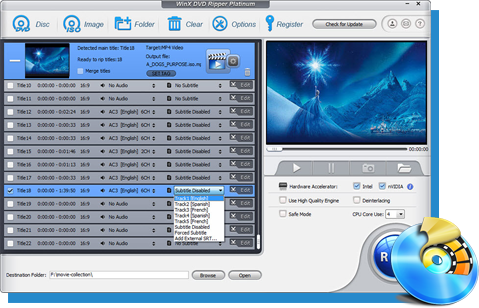
Fed up with VLC ripping DVDs with no audio or choppy sound? WinX DVD Ripper Platinum reliably extracts all audio tracks, bypasses CSS and region locks, and converts DVDs to MP4, H.264, or ISO while preserving original sound and video quality.
VLC Convert DVD to MP4 No Audio? Try These Solutions
If your DVD rip looks fine but plays with no sound, you’re not alone. Based on repeated reports from VLC forums and Reddit, this "VLC convert DVD to MP4 no audio" issue usually comes down to audio tracks, codec compatibility, or how VLC handles DVD conversion. Follow the fixes below in order, starting from the most common causes.
Solution 0. Check Whether the Ripped File Actually Contains an Audio Track
Before changing any settings, confirm that the converted file really has an audio stream. In many cases, the audio is present but unsupported by certain players.
- Open the converted file in VLC.
- Go to Tools > Codec Information.
- Check whether an Audio Stream is listed.
If no audio stream appears, VLC likely dropped the audio during conversion. If an audio stream exists but plays silently in Windows Media Player or QuickTime, the issue is usually codec compatibility, not the rip itself.
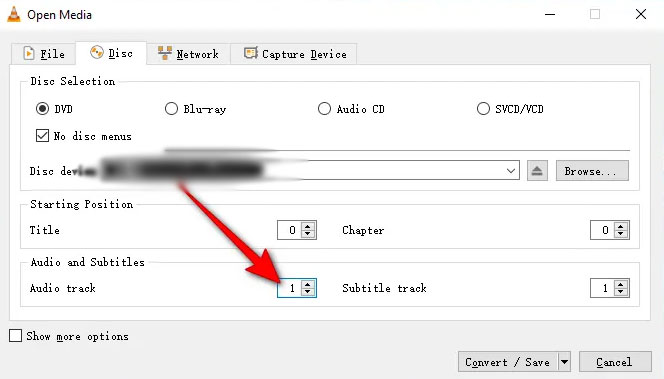
Solution 1. Manually Select the Correct Audio Track from the DVD
Many DVDs contain multiple audio tracks (AC3, DTS, commentary, different languages). VLC may select an empty or unsupported track by default, resulting in no sound.
When loading the DVD for conversion, go to the Audio and Subtitles section and manually enter the correct audio track number.
If you’re unsure which track works, play the DVD in VLC first, then go to Audio > Audio Track and switch between tracks until you hear sound. Use that same track number during conversion.
Solution 2. Adjust Audio Codec Settings (Most Common Fix)
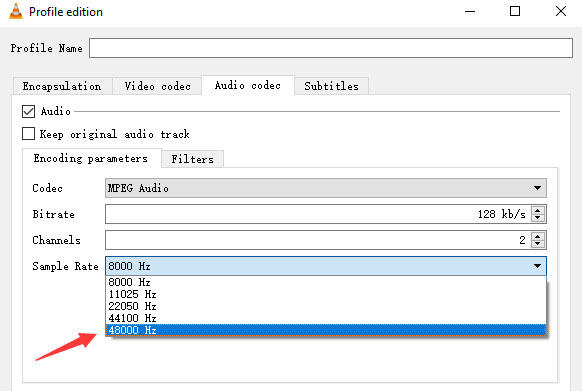
A large number of “muted” or “choppy audio” conversions are caused by incorrect audio codec settings. After choosing an output profile, click the wrench icon (Profile edition) to review the audio options.
- Make sure the Audio checkbox is enabled.
- Avoid MPEG audio; use MP3, AAC, or AC3 instead.
- Enable Keep original audio track whenever possible.
DVD audio is already standardized at 48 kHz, so changing the sample rate rarely fixes missing audio. Codec incompatibility is usually the real cause.
Solution 3. Avoid MPEG-4 Codec When Ripping DVDs
According to user reports on VLC and VideoLAN forums, using the MPEG-4 codec for DVD sources frequently causes missing or broken audio.
For best results, use H.264 video with MP4 or MKV containers. This combination is far more reliable for preserving DVD audio tracks, especially on older or multi-track discs.
Solution 4. Test the File in a Different Media Player
If the converted file has audio in VLC but not in Windows Media Player or QuickTime, the issue is likely that those players don’t support AC3 or DTS audio.
Try playing the file in VLC, Firefox, or MPC-BE. If the audio works there, reconvert the DVD using a more compatible format like MP4 + AAC.
Solution 5. Turn Off Audio Filters During Conversion
Audio filters are a known cause of broken or missing sound when ripping DVDs. If any audio filters are enabled, VLC may fail to process DVD audio streams correctly.
Go to Tools > Preferences > Audio and disable all audio filters, then restart the conversion from scratch.
Solution 6. Do Not Convert the DVD While Playing It
Avoid playing the DVD while converting it. Running playback and conversion at the same time can interfere with audio buffering and lead to missing or corrupted audio tracks, VLC DVD rip audio out of sync issue.
Close all playback windows and start the conversion in a fresh VLC session.
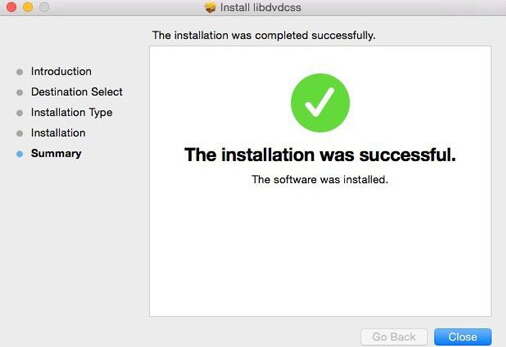
Solution 7. Install libdvdcss (For Encrypted or Region-Locked DVDs)
If you’re ripping encrypted or region-locked DVDs, VLC requires the libdvdcss library to read the disc properly. Without it, VLC may fail to extract audio tracks correctly.
Solution 8. Update VLC (Low Priority)
Using an outdated VLC version can occasionally cause audio issues, but upgrading rarely fixes missing audio by itself. Only try this step if you’re running a very old VLC build.
Solution 9. Cinavia-Protected DVDs (Rare but Critical)
Some commercial DVDs use Cinavia watermark protection, which can mute or disable audio during playback or conversion. VLC cannot remove Cinavia, even with libdvdcss installed.
If the audio disappears after a few minutes or never plays at all, you’ll need a dedicated DVD ripping tool that can handle Cinavia-protected discs.
Solution 10. Use a Dedicated DVD Ripper Instead of VLC
VLC works for basic DVD ripping, but it often struggles with audio tracks, codecs, and copy protection and shows "VLC convert DVD to MP4 no audio" error. This is why many experienced users switch to tools like WinX DVD Ripper Platinum.
It can automatically detect the correct audio track, handle encrypted DVDs, and avoid the silent-audio issues commonly reported with VLC.
- Remove DVD protections, including region codes, Disney X-Project, Sony ARccOS, CSS, UOPs, latest schemes, and support scratched/damaged DVDs, 99-titles, workout/exercise discs, etc. without installing libdvdcss library.
- Backup DVDs to MP4, MOV, WMV, MKV, AVI, H264, MPEG-4, HEVC, ProRes, VOB, MPEG-2, etc. with the correct audio track auto selected.
- Free change DVD audio parameters including audio codec, audio channel, audio bit rate, sample rate, etc. all at your willing.
- 1:1 Backup DVD with main/full title or clone DVD to ISO image.
Follow the steps below to skirt DVD copyright protection and digitize DVDs on Windows PC without DVD not reading error.
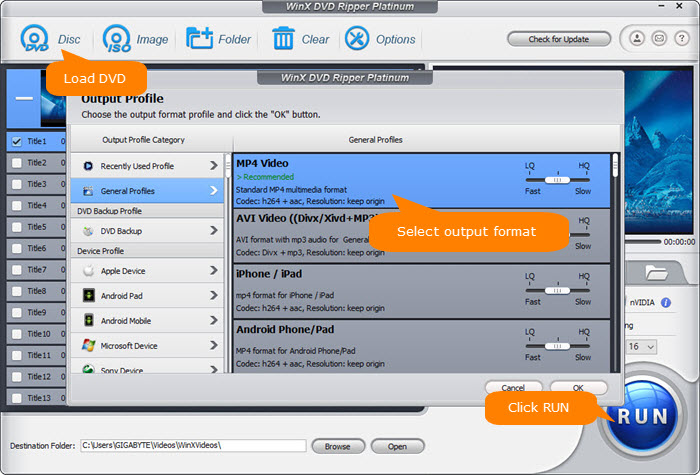
Step 1. Once you have installed this VLC alternative on your Windows 10/11 operating system, insert your DVD disc into the DVD tray of your computer. Fire up this VLC alternative and tap the DVD disc button on the main interface of the application. Click on this button to initiate the DVD loading process.
The VLC alternative software is designed to handle various DVD disc conditions. It can read damaged, scratched, unplayable, and even DVDs with 99 titles that many other DVD rippers struggle with.
Step 2. Wait for a few seconds, the ripper will auto read the movie information and choose the correct title for you, after which you are informed of a readymade profile window. Select MP4 H.264 as the output format, which is regarded as the most compatible format.
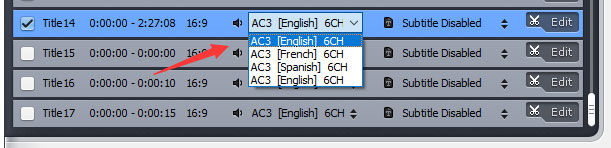
If your DVD disc contains several audio tracks or owns foreign language tracks, you can manually opt for the audio track you need (shown as below). The same also applies to subtitle track selection if multi-track subtitles exist in your DVD.
Step 3. Specify the destination folder and click RUN to begin ripping DVDs. After the ripping, you can open the converted movie and then open it directly through your default media player or watch it on your Windows 10/11 without audio missing trouble. No more VLC convert DVD to MP4 no audio error.
Legal Disclaimer: WinXDVD, developed by Digiarty Software, is designed strictly for personal, non-commercial media backup under fair use. Digiarty Software strictly respects copyright laws and does not condone, facilitate, or support copyright infringement or unauthorized copying. Users are advised to check and comply with their local DVD copyright laws and regulations before use.
Part 4. FAQs about VLC DVD Ripping No Sound
1. Why is there no audio on my VLC converted file?
The audio might be missing due to unsupported output formats, disabled audio tracks, or incorrect codec selection. Always check the profile’s Audio Codec tab, enable 'Keep original audio track', and ensure VLC supports the DVD’s audio format.
2. How do I rip only audio from a DVD in VLC?
Go to Media → Convert/Save, add your DVD, and select an audio-only profile like MP3 or FLAC. Adjust codec, bitrate, and channels under Audio Codec. Choose output folder, then start conversion to extract clean audio tracks without video.
3. Why is VLC not playing audio?
Audio playback issues can result from muted volume, wrong audio output, or codec incompatibility. Ensure volume is up, correct output device is selected, audio is enabled, and VLC’s output module matches your system. Updating VLC or drivers often resolves persistent problems.
4. Why is my DVD rip’s audio out of sync in VLC?
Audio desync often occurs from high CPU load, incorrect conversion settings, or damaged DVD sources. Increase VLC’s audio buffering, use compatible codecs, or lower bitrate during ripping. Using dedicated rippers like WinX DVD Ripper can ensure properly synced audio and video streams.
5. How to fix DVD rip no sound issue in VLC?
Confirm the DVD plays normally in VLC first. In Convert/Save, click the wrench icon, enable 'Audio', choose a supported codec, and check 'Keep original audio track'. If issues persist, try disabling audio filters or using a dedicated DVD ripper for reliable results.
6. Can VLC rip multi-track DVDs correctly?
Many DVDs have multiple audio tracks (languages, commentary). VLC may pick the wrong track by default. Always manually select the correct track under Audio > Audio Track before ripping to avoid silent or wrong audio output.
7. Why does VLC sometimes drop audio with MPEG-4 conversions?
Using MPEG-4 containers can break DVD audio streams. Choose H.264 + MP4 or MKV instead. These formats preserve audio tracks better, prevent choppy or missing sound, and maintain synchronization across most players.
8. Can playing the DVD while converting cause audio issues?
Yes. Simultaneously playing a DVD during conversion may corrupt audio tracks or create choppy sound. Close all playback and start conversion in a fresh VLC session to ensure proper extraction of video and audio streams.