








How to Rip DVD to NAS (Synology/QNAP) for Streaming & Backup
Summary: This guide introduces top DVD rippers, specifically focusing on how it can help you digitize DVD collection to MP4 and other formats for easy storage and streaming from your NAS. We'll cover compatibility with various NAS devices and media players (like Plex, Emby, DLNA players), ensuring your movies play seamlessly, all while keeping your digital library organized.
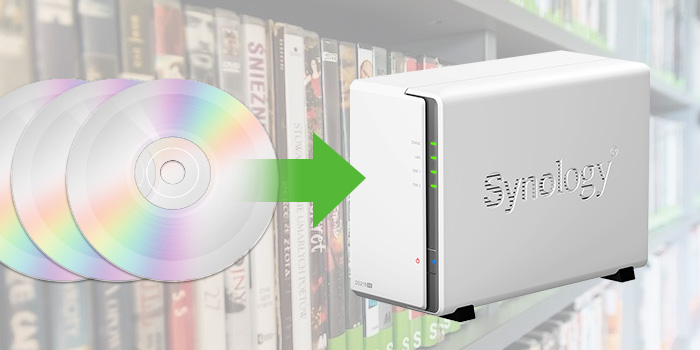
Want to ditch the stacks of DVDs and easily stream your movie collection from your Synology, QNAP, or other NAS? While free tools like MakeMKV and HandBrake are often mentioned to rip DVD to NAS, they might not fully meet your needs. MakeMKV creates large, uncompressed files, eating up valuable NAS space. HandBrake can be tricky with copy-protected discs and isn't always the fastest or easiest to use. So, what's the ideal DVD ripper that can handle all your DVDs, bypass copy protection, deliver good quality in manageable file sizes, and make streaming from your NAS a breeze?
Rip DVDs to MP4, MKV, or ISO for NAS Storage and Streaming
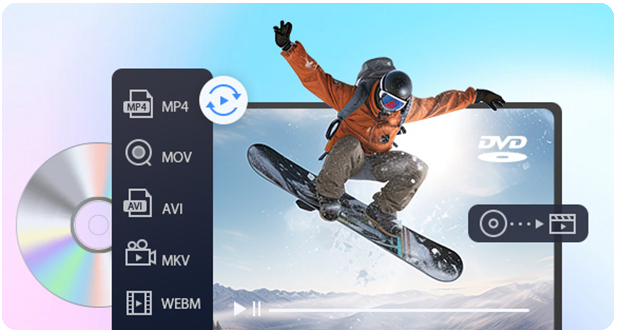
WinX DVD Ripper Platinum efficiently backs up your 99-title, new, classic, and damaged DVDs, ensuring safe storage on NAS, USB, SSD, HDD, and cloud. It helps copy DVDs to network drive NAS with MP4, HEVC, H.264, MOV, AVI, and over 350 formats, perfect for streaming via Plex, Jellyfin, Emby, and DLNA players. It also copies DVDs to ISO images, Video_TS folders, and MPG files with original menus, subtitles, and audio tracks. It spits out perfect digital copies in about 5 minutes thanks to its super-speedy GPU acceleration.
Please DO Not use WinX DVD Ripper to rip rental DVDs.
Table of Contents
Part 1. How to Rip DVDs to NAS on PC/Mac for Streaming
WinX DVD Ripper Platinum can easily rip DVD to Network Drive Synology NAS, QNAP, etc. in the format you need for easy streaming or safe backup. Download and install the DVD to NAS movie ripper on your computer. This DVD to NAS ripper is available in both Windows and Mac versions.
 Free download the Windows (11/10 and earlier) version
Free download the Mac (Sonoma and earlier) version
So, you're ready to ditch the discs and copy your DVD onto your Synology NAS? Awesome! To show you exactly how it's done, we'll walk through the process step-by-step using a Windows 10 or 11 computer as our example.
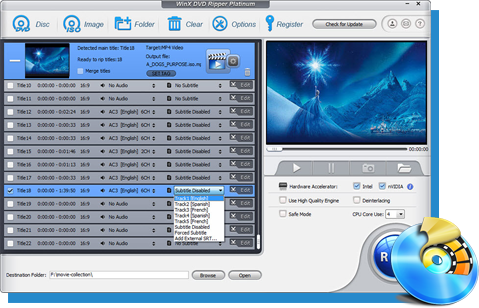
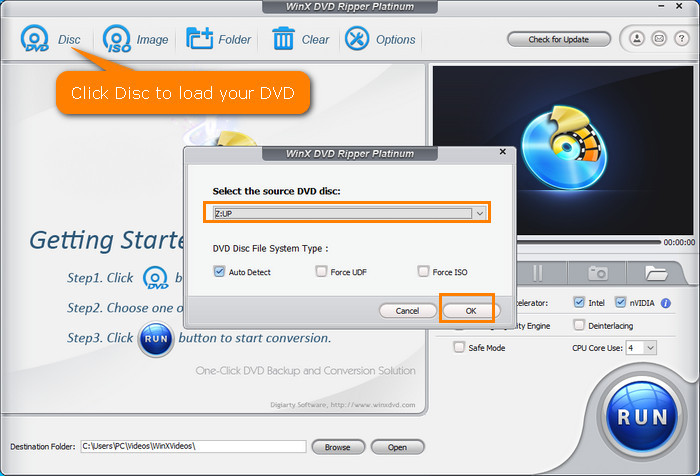
Step 1. Insert a DVD disc
Insert your DVD into the optical drive. Open the DVD to Synology NAS ripper and click "DVD Disc". Select the source DVD disc and click OK to load it.
Step 2. Choose an output format
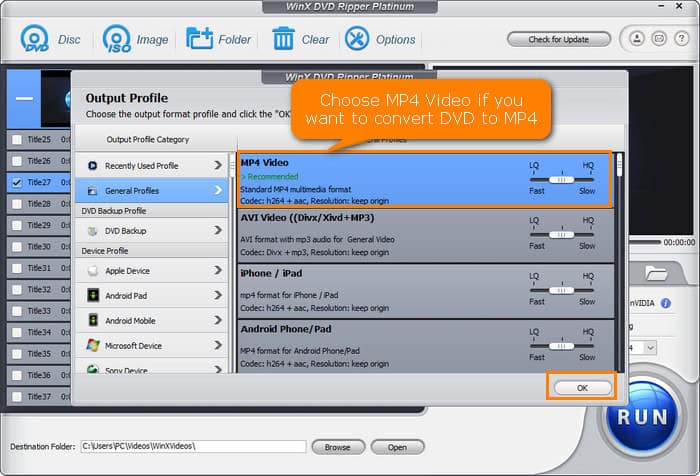
Once the DVD is loaded, the main title will be auto selected for a protected movie DVDs without any 3rd party help. Then an output video format list will pop up asking you to select an output format for NAS drive.
To rip DVDs for NAS streaming, you're suggested to rip DVDs to MP4. Go to General Profiles > select MP4 Video from the list. H.264, WMV, MOV, MKV, and devices such as iPhone, iPad, Samsung, and many more are all accessible.
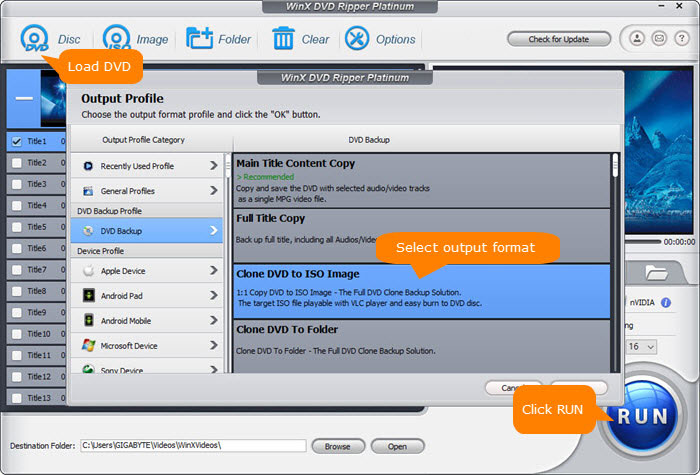
To save a 100% quality DVD copy in NAS media server, navigate to the DVD backup profile and select ISO image or DVD folder as the output format, which will backup DVD to NAS drive with all menus/chapters kept.
Step 3. Set an output folder
Set a folder on your computer to save the output file. Go to "Destination Folder" -> "Browse" -> choose a folder -> click OK.
Step 4. Start ripping DVD to NAS.
Hit the button "RUN" and the DVD to NAS conversion starts right away. Minutes later, you will get a movie video for NAS. Then you can import the DVD movie video to your NAS Synology, QNAP, etc. via File Station or save it to any home media server, hard drives, mobile devices, etc.
Pro tips: After ripping your DVD to NAS, consider using an AI video enhancer to improve its quality before playback. Modern AI tools can intelligently reduce noise, sharpen edges, and upscale standard-definition (SD) DVD videos, making them look clearer and more detailed when streamed from your NAS to TVs or other devices. This ensures a much better viewing experience without simply enlarging blurry pixels. Learn more at best video enhancer software.
Legal Disclaimer: WinXDVD, developed by Digiarty Software, is designed strictly for personal, non-commercial media backup under fair use. Digiarty Software strictly respects copyright laws and does not condone, facilitate, or support copyright infringement or unauthorized copying. Users are advised to check and comply with their local DVD copyright laws and regulations before use.
Hardware Requirements: Rip and Backup DVD to NAS
Here's a closer look at the hardware you'll need to rip DVDs and store them on your NAS:
Essential Hardware. Computer with a DVD Drive: This seems obvious, but ensure your computer has a functioning DVD drive. Internal drives are most common, but external DVD drives connected via USB also work if compatible with your system.
DVD Compatibility. Not all DVD drives are created equal. Some struggle with heavily scratched or copy-protected DVDs. If you encounter issues with specific DVDs, consider upgrading your DVD drive to a model known for better compatibility. The above DVD ripper for NAS should deal with any copy protected DVD and damaged DVDs successfully.
Network Connection. A stable network connection between your computer and NAS is crucial. Ideally, a wired connection via ethernet cable offers the fastest and most reliable data transfer speeds compared to Wi-Fi.
Part 2. Best DVD Format for NAS: MP4 vs MKV vs ISO
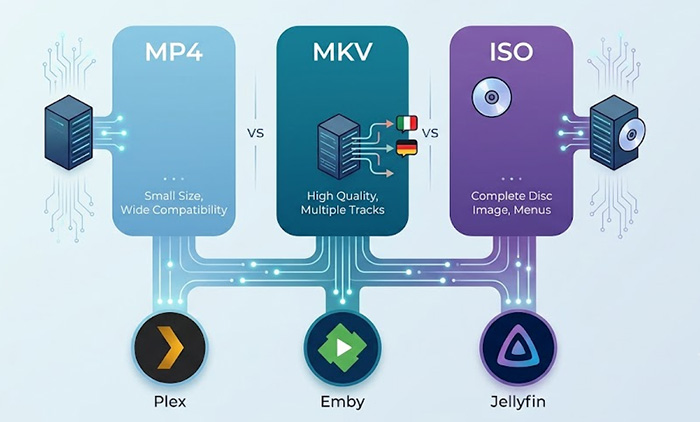
Choosing the right format is one of the most important steps when ripping DVDs to NAS. If you want to stream DVDs through Plex, Jellyfin, or Emby, a highly compatible format like MP4 can reduce unnecessary transcoding. If your goal is long-term preservation, MKV or ISO may be a better choice because they keep more of the original DVD content.
Format |
Best Use |
Advantages |
Limitations |
MP4 (H.264) |
Plex, Jellyfin, Emby streaming |
Excellent compatibility, smaller file size, and smooth playback on TVs, phones, and streaming devices. |
Limited support for multiple subtitle and audio tracks compared with MKV. |
MKV |
DVD backup and movie archive |
Keeps multiple audio tracks, subtitles, chapters, and more original DVD content in a single file. |
Some devices may require transcoding before playback. |
ISO / DVD Folder |
Complete DVD backup |
Preserves the original DVD structure, including menus, chapters, subtitles, and special features. |
Requires more storage space and is less convenient for direct streaming. |
Choosing a format for NAS storage? Compare ISO, MKV, MP4, H.264, and H.265 based on storage and streaming needs and check the best DVD format for NAS.
1. Best Format for Streaming DVDs from NAS via Plex, Emby, or Jellyfin
For most home media servers, MP4 with H.264 video and AAC audio provides the best balance between compatibility, quality, and file size. This format is widely supported by Plex, Jellyfin, Emby, Apple TV, Android TV, Roku, Chromecast, and smart TVs, reducing the chance of playback issues or real-time transcoding.
- Format: MP4
- Video codec: H.264 (recommended)
- Audio codec: AAC or AC3
- Resolution: DVD standard 480p/576p
When you rip DVDs to NAS in MP4 format, your media server can usually direct play the video without converting it again. This helps reduce CPU usage on the NAS and provides smoother playback, especially on lower-powered Synology or QNAP models.
2. Best Format for DVD Backup on NAS
For users who want to preserve their DVD collection rather than only stream movies, MKV is usually the preferred choice. MKV can store multiple audio tracks, subtitles, and chapter information in a single file, making it suitable for movie archives and collectors who want to keep more of the original disc content.
- Format: MKV
- Video codec: H.264 or H.265
- Subtitle support: Multiple subtitle tracks
- Audio support: Multiple language tracks
However, MKV compatibility depends on the playback device and media server settings. Some devices may require Plex or another media server to transcode MKV files before playback. For maximum device compatibility, MP4 remains the safer choice.
3. Should You Rip DVDs to ISO for NAS Backup?
ISO images are ideal when you want an exact copy of a DVD. Unlike MP4 or MKV, ISO keeps the original DVD structure, including menus, chapters, and special features. However, ISO files are much larger and are not as convenient for everyday streaming.
Many users choose ISO for archival purposes and MP4/MKV for daily playback, depending on whether they prioritize preservation or convenience.
NAS Transcoding: Why Format Choice Matters
Some NAS devices can transcode unsupported video formats during playback, but real-time transcoding requires significant CPU resources. If multiple family members stream videos at the same time, a NAS may struggle with high-resolution or incompatible files.
Choosing a NAS-friendly format such as MP4 H.264 helps your media server use direct play instead of relying on transcoding, resulting in smoother streaming and lower hardware requirements.
Key Takeaway: For most users, MP4 with H.264 is the best format for ripping DVDs to NAS because it offers the widest compatibility with Plex, Jellyfin, Emby, and streaming devices. Choose MKV when preserving multiple subtitles and audio tracks matters, and use ISO when you need a complete backup of the original DVD structure.
Part 3. What Is NAS and Why Use It for a DVD Collection?
NAS (Network Attached Storage) is a dedicated storage device connected to your home network that allows multiple devices to access files from a centralized location. Unlike a traditional external hard drive that is usually connected to one computer, a NAS works as a personal media server where you can store, organize, and stream your digital DVD collection throughout your home.
After ripping DVDs to a NAS drive, you can watch your movies on smart TVs, computers, phones, tablets, and streaming devices through media server apps such as Plex, Jellyfin, Emby, or Synology's built-in video applications. This eliminates the need to manually move video files between devices or keep physical discs nearby.
Why Store Ripped DVDs on a NAS?
- Store your entire DVD collection in one NAS location and access it from multiple devices across your home network.
- Stream ripped DVDs to smart TVs, Apple TV, Android TV, Roku, Plex, Jellyfin, and other media players without using physical discs.
- Digitizing DVDs reduces disc clutter and helps protect your collection from scratches, aging, and frequent handling.
- NAS devices support expandable storage, making them suitable for growing movie libraries.
- RAID configurations can improve storage reliability and protect against certain drive failures.
For DVD collectors, a NAS provides a convenient way to turn a physical disc collection into a searchable and accessible home media library. Combined with the right DVD ripping format, it can deliver smoother playback, easier management, and a better viewing experience.
Part 4. FAQs about How to Rip DVD to NAS
1. How do I copy a DVD to my NAS?
Copying a DVD to your NAS involves using DVD ripping software like WinX DVD Ripper. These programs can create an ISO image (exact copy) or DVD Folder (all files) of the disc. Simply insert the DVD, choose the copy option in your software, and select your NAS folder as the destination. The software will create a replica of the DVD on your NAS, allowing you to archive the entire disc content. Remember to check NAS compatibility for playback if you plan to use a media server.
2. How do I put movies on my NAS?
Use ripping that converts the movie into a smaller, playable video file. Choose ripping software, select the DVD and output format (e.g., MP4), and choose your NAS folder (or a temporary location for transfer later). Ripping is ideal for playback on various devices.
3. What is the best way to rip DVDs to NAS?
Use a separate PC or Mac with sufficient storage (1-2 TB) for temporary files during the ripping process. Rip the DVD with MakeMKV. For 4K Blu-rays or if Plex cannot play the ripped format directly, use Handbrake to convert the file into a Plex-compatible format. Move the final ripped or transcoded files to your NAS for storage.
4. How do I upload movies to my Synology NAS?
Use File Station on your computer's web browser to navigate to your desired folder on the NAS. Simply drag and drop movies from your computer or upload them using the "Upload" function. Alternatively, explore tools like Cloud Sync for folder syncing or USB Copy for transferring from an external drive directly plugged into your NAS. Remember to choose compatible video formats for media server playback.
5. What format do NAS drives use?
NAS drives themselves don't actually have a specific format. They typically use a file system like ext4, Btrfs, NTFS, or FAT32 to manage how data is stored on the drives within the NAS. This file system determines how files are organized and accessed. The format of the files you store on your NAS (movies, music, etc.) can vary depending on your needs. You can store them in ripped formats like MP4 or MKV for playback on various devices, or create ISO images or DVD folders for exact copies of DVDs.
* Still have trouble about putting DVD collection on NAS drive? Just Email Our Support Team >>