



 win
win

 Super Resolution
  Video Stabilization
  Frame Interpolation

 Denoise Image
  Restore Old Photo
  Unblur Image
  Recover Face
  Upscale Image
  Colorize Photo
 Video Conversion >
 Video Compression >
 Screen Recording >


VLC Media Player Review: Features, Pros, Cons & Alternatives
VLC is so popular and you may have heard people talking about it a lot. You know it's a player and it supports various formats. But if you have Windows Media Player or QuickTime pre-installed, you will wonder "do I need VLC media player". Having been downloaded more than 122 million times, VLC Media Player can do more than others. Let's dig deep into VLC.
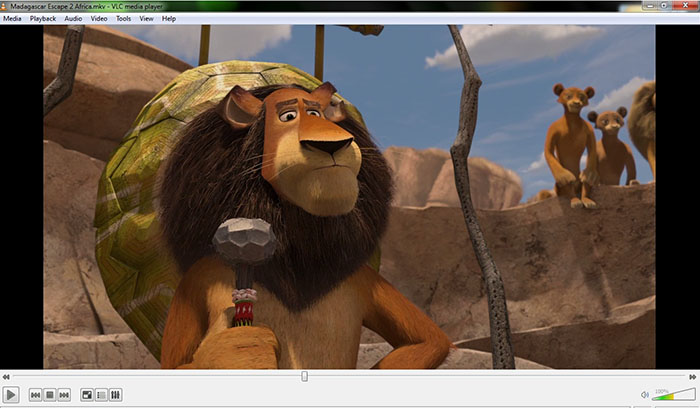
Table of Content
Part 1. What Is VLC Media Player?
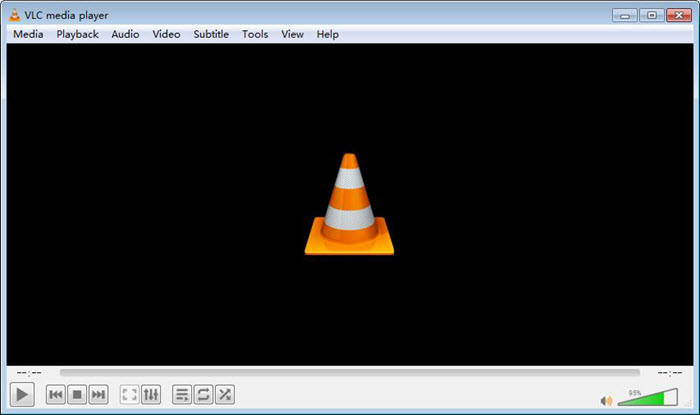
VLC Media Player is a free, open-source multimedia player developed by the VideoLAN project. It is best known for playing almost any video and audio format without requiring additional codec packs, making it one of the most popular media players for Windows, macOS, Linux, Android, and iOS.
Unlike many built-in players such as Windows Media Player or QuickTime, VLC supports a much wider range of formats, including MP4, MKV, AVI, MOV, FLAC, DVD videos, network streams, and more. Beyond playback, VLC also includes useful tools for video conversion, screen recording, subtitle synchronization, and media streaming.
Another reason VLC remains popular is its lightweight and privacy-friendly design. It is completely free, contains no ads, and runs locally without requiring an online account. For users who need a reliable player for downloaded videos, personal media libraries, or different file formats, VLC remains a strong all-purpose choice.
App |
VLC Media Player |
Developer |
VideoLAN |
License |
Free and open-source |
Platforms |
Windows, macOS, Linux, Android, iOS |
Supported Media |
Video, audio, DVD, network streams, IPTV |
Hardware Acceleration |
Yes (GPU decoding support varies by platform) |
Official Website |
Part 2. Key Features of VLC Media Player
VLC has remained one of the most popular free media players because it solves several common playback problems: unsupported formats, missing codecs, DVD compatibility, and the need for a lightweight player that works across different devices. Instead of installing multiple tools for different media files, many users rely on VLC as an all-purpose playback solution.
1. Play Almost Any Video Format Without Extra Codec Packs
A major reason users choose VLC is its built-in codec support. When Windows Media Player or other default players fail to open unfamiliar files, VLC can usually handle them directly without searching for additional codec packages.
It supports popular formats including MP4, MKV, AVI, MOV, WMV, FLV, MP3, FLAC, and many other audio/video formats. This makes it especially useful for users who download videos from different sources or maintain a mixed media library.
2. Play DVDs, ISO Files, and Local Media Collections
For users who still keep physical media or DVD backups, VLC provides a convenient way to access DVD content without relying on outdated default players. It can open DVD folders, ISO images, and common disc formats directly.
- Play DVD folders and ISO files without burning them back to discs.
- Access local movie collections stored on hard drives.
- Handle various video sources from older and newer devices.
However, commercial DVDs with encryption may require additional solutions, as VLC is not designed as a complete DVD decryption tool.
3. Stream Media from Network Devices and Online Sources
VLC is also popular among users who watch media outside traditional local playback. Its streaming support allows users to open network streams, IPTV links, and media shared from local networks.
This is useful for users who store videos on NAS devices or want a simple player that works across different platforms without depending on a specific ecosystem.
4. Convert Videos and Handle Basic Media Tasks
Although VLC is mainly known as a player, it also includes basic conversion tools. Users can convert videos into formats such as MP4, adjust codec settings, and extract audio without installing a separate converter.
This feature is convenient for occasional conversions, but users who frequently process large files, convert 4K videos, or need batch processing may prefer dedicated video conversion software.
5. Adjust Playback with Built-in Video and Audio Tools
Beyond simple playback, VLC includes many practical controls for users who need more flexibility. These tools are especially useful when watching downloaded videos, tutorials, or foreign-language content.
- Adjust playback speed for learning or reviewing videos.
- Synchronize subtitles and audio tracks.
- Apply video filters, rotate videos, or take screenshots.
- Record desktop activity or capture playback frames.
6. Free, Cross-platform, and Available Everywhere
Unlike many commercial media players, VLC is completely free and does not lock important features behind paid versions. The same core experience is available on Windows, macOS, Linux, Android, and iOS.
For users who frequently switch between devices, VLC provides a consistent playback experience without worrying about platform restrictions or subscription costs.
Part 3. VLC Media Player Pros and Cons
VLC has remained popular for decades because it solves many common playback problems. However, like any software, it also has limitations depending on what users expect from a modern media player.
Pros:
- Supports a huge range of video and audio formats without extra codecs.
- Completely free, open-source, and contains no advertisements.
- Works on Windows, macOS, Linux, Android, and iOS.
- Includes useful tools such as conversion, streaming, and screen recording.
- Lightweight and runs well on older computers.
Cons:
- Interface design feels outdated compared with newer media players.
- Blu-ray playback support is limited and requires additional setup.
- Commercial DVD playback may require libdvdcss or additional components.
- Advanced video editing and enhancement features are limited.
- Some 4K/8K HDR videos may require more powerful hardware.
Part 4. How to Use VLC Media Player
Most users start with VLC because it can open almost any video file without extra codecs, but its capabilities go far beyond playback. VLC also includes built-in tools for video conversion, screen recording, subtitle adjustment, media streaming, and DVD playback. Whether you want to watch a downloaded movie, convert a video for another device, or fix common playback issues, the following steps will help you get more out of VLC Media Player.
1. How to Use VLC to Convert Videos?
Step 1. Download and install VLC on your computer from its official site: videolan.org.
Note: It is a cross-platform program available on Windows, macOS and Linux. Please choose the correct version according to your system.
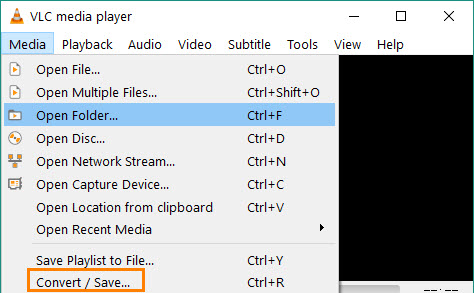
Step 2. Launch VLC video converter and click on Media. Find Convert/Save… and click it.
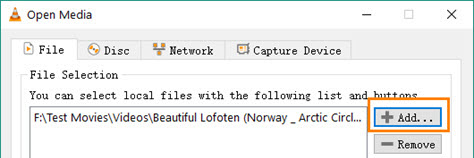
Step 3. Under File tab, there is a File Selection. Click Add button to import a local file or multiple files into the conversion list. After that, click Convert/Save.
Tips:
• If you try to delete one video from the list, select it and click Remove.
• You are allowed to use a subtitle file for the video which can be synced after converting.
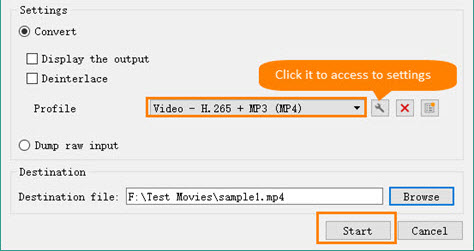
Step 4. Move to Settings panel and get Profile. Click dropdown arrow to select an output profile, for example Video – H.264 + MP3 (MP4).
If you try to adjust encoding parameters, click the wrench icon to access to profile edition page.
• Under Video Codec tab, you can change encoding parameters including codec, bit rate, frame rate, quality or give custom options. Resolution and aspect ratio can be modified by setting scale and frame rate.
• Audio codec, bit rate, channels and sample rate can be altered when you go to Audio Codec tab.
Step 5. Now, you need to click Browse button to give a destination folder to save converted file.
Step 6. Click Start and VLC video converter will start the conversion work.
Not only does VLC help you convert local files, but also free download online video to save on Windows/macOS. The process is simple yet fast:
2. How to Use VLC to Free Download Videos?
Step 1. Find your desired online video and copy the URL.
Step 2. Run VLC media player > right-click on the main interface to choose "Open Media" > click "Open Network".
Step 3. Paste the URL to the analyze box > tap "Play" at the bottom of the window.
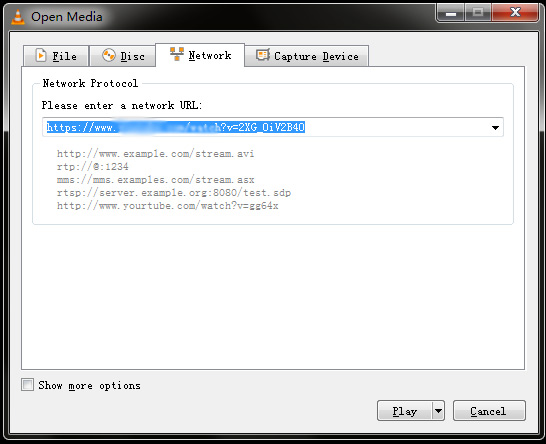
Step 4. As the video plays, head to "Tools" > opt for "Codec Information". This is for Windows 10/8/7. As for macOS users, access to "Windows" > tap "Media Information".
Step 5. Locate to "Location" and copy the URL.
Step 6. Copy the URL from location and re-open a browser to paste the URL > choose save to save the video to your local computer.
Part 6. Common VLC Problems and User Complaints
Although VLC is known for its wide format support and reliability, users still report occasional playback issues, especially with newer codecs, high-resolution videos, and protected media. Based on common discussions from VLC users, most problems are related to hardware decoding, codec compatibility, DVD playback, and the overall user experience.
1. VLC Stutters or Lags When Playing 4K/HEVC Videos
One of the most common complaints is choppy playback when opening 4K, H.265/HEVC, or high-bitrate videos. While VLC supports these formats, smooth playback depends heavily on GPU decoding support and system performance. On older PCs or laptops, users may experience:
- Video freezing or dropping frames during 4K playback.
- High CPU usage even when playing supported formats.
- Audio and video becoming out of sync.
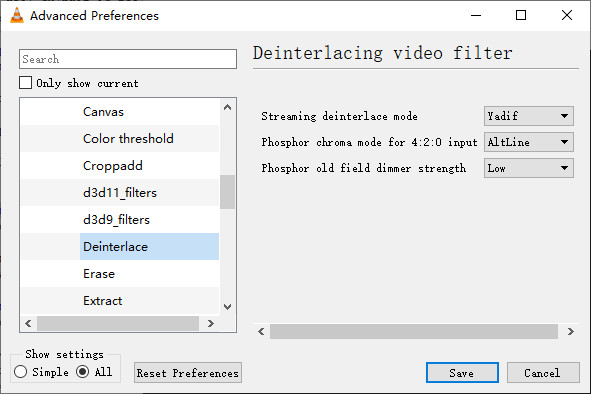
Adjusting hardware acceleration settings in VLC can help in some cases, but users with demanding 4K libraries may need a player optimized for modern GPU decoding.
2. VLC Cannot Properly Play Commercial DVDs
VLC can open many DVD folders and unprotected discs, but commercial DVDs with copy protection remain a common pain point. Users often report that VLC may fail to:
- Play encrypted DVDs with CSS protection.
- Bypass DVD region restrictions.
- Handle newer disc structures or protection schemes.
Some users install libdvdcss to improve DVD compatibility, but this adds an extra setup step and does not guarantee support for every protected disc. For users with a large DVD collection, a dedicated DVD player or ripper may provide a smoother workflow.
3. VLC Has Subtitle, Audio Track, or MKV Playback Issues
Although VLC supports MKV, multiple audio tracks, and subtitles, users occasionally encounter problems such as missing subtitles, incorrect subtitle timing, or unsupported audio formats. Common fixes include:
- Manually selecting the correct audio track or subtitle stream.
- Changing subtitle encoding settings.
- Updating VLC to the latest version.
4. VLC Lacks Modern Media Management Features
Many long-time VLC users appreciate its lightweight design, but some users feel that its interface and library management features are outdated compared with newer media players. Common requests include:
- A more modern media library experience.
- Better organization for large movie collections.
- Smoother integration with home media servers and streaming devices.
VLC remains an excellent free playback tool, but users who want a more polished entertainment experience may prefer alternatives with stronger media management and streaming features.
Part 6. Best VLC Alternative for Windows and Mac - 5KPlayer
VLC remains an excellent free media player, but some users may need features that VLC does not focus on, such as smoother 4K playback, better media organization, AirPlay support, or integrated online video features.
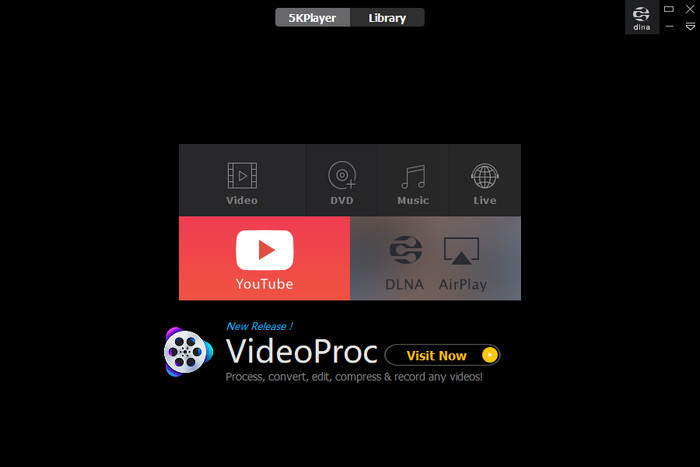
5KPlayer is a VLC alternative designed for users who want broader multimedia features in one application. Besides playing common video and audio formats, it supports 4K/8K playback, AirPlay streaming, DLNA media sharing, and online video downloads.
Compared with VLC, 5KPlayer focuses more on modern playback scenarios, including high-resolution videos, Apple ecosystem streaming, and home media sharing.
- Play 4K/8K videos smoothly.
- Support AirPlay and DLNA streaming.
- Handle popular video and audio formats directly.
- Include additional media management features.
FAQs. About VLC Media Player
1. Is VLC Media Player safe?
Yes. VLC is a trusted open-source media player developed by VideoLAN. It does not contain ads or bundled unwanted software when downloaded from the official website.
2. Is VLC completely free?
Yes. VLC is free and open-source software available for Windows, macOS, Linux, Android, and iOS.
3. Can VLC play 4K videos?
Yes. VLC can play many 4K videos, but smooth playback depends on your hardware, GPU decoding support, and video codec.
4. Can VLC play DVDs?
VLC can play many DVDs, DVD folders, and ISO files. However, some commercial DVDs with encryption may require additional support.
5. Can VLC convert videos?
Yes. VLC includes a basic video conversion function, although dedicated video converters usually provide more formats, presets, and faster processing.