



 win
win

 Super Resolution
  Video Stabilization
  Frame Interpolation

 Denoise Image
  Restore Old Photo
  Unblur Image
  Recover Face
  Upscale Image
  Colorize Photo
 Video Conversion >
 Video Compression >
 Screen Recording >


What is MP4 (MPEG-4 Part 14) Format? Everything about MP4 is Here!
What is the MP4 format? MP4, or MPEG-4 Part 14, is a media container format that stores video, audio, subtitles, and images, normally in a .mp4 file extension. As for the popularity, MP4 is the only game in town, and to some extent, is a pretty well-educated guess in every single regard: itself (best balance of size and quality), powerful x264 encoder, compatibility with portable devices, and the rise of streaming service. Keep reading if you wanna know deeper about the MP4 format and everything related to MP4.
The Best MP4 Video Converter - Convert Any Video to/from MP4 Freely
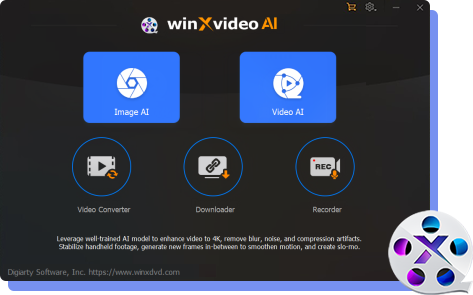
Free download Winxvideo AI, the No.1 fast free MP4 video converter, to handle every single MP4 file. It supports immaculate video conversion between MP4 and any other video formats, to help play any video on iPhone, iPad, Android, PSP, TV, etc. You can convert MP4 to/from MKV, MOV, AVI, FLV, WMV, WebM, HEVC, H.264, MP3, you name it!
Table of Content
Part 1. What Is MP4 File Format?
1. MP4 (MPEG-4 Part 14) Introduction
MP4 (MPEG-4 Part 14) is a digital multimedia container format designed to store video, audio, subtitles, still images, text, and other data. To make it more clear: an MP4 container (.mp4) may include video encoded with codecs such as H.264 or HEVC, audio such as AAC or MP3, and subtitle streams. MP4 files are not a video compression format; instead, they are containers that can hold different types of compressed media data. MP4 is based on the QuickTime File Format and the MPEG-4 Part 12 standard, and is defined under ISO/IEC 14496-14 (MPEG-4 Part 14, latest revisions updated in recent years).
MP4 format is widely used across platforms and devices due to its high compatibility and efficiency. It is commonly used for storing, sharing, downloading, and streaming video over the internet. However, unlike MP3 (which is audio-only), MP4 is a multimedia container format that can include both video and audio content.
2. MP4 Filename Extensions
MP4 video files commonly use the .mp4 extension. Other related filename extensions include .m4a, .m4b, .m4p, .m4r, .m4v, .3g2, and .3gp. These formats are all based on the MP4 container structure but are used in different scenarios. More detailed explanations are listed below.
- .mp4 - standard MP4 file containing video, audio, and subtitles.
- .m4a - MP4 files containing only unprotected audio streams, typically AAC.
- .m4p - MP4 audio files protected with DRM (e.g., FairPlay encryption).
- .m4b - audiobook and podcast format, often supporting chapter markers.
- .m4r - ringtone format used by Apple iPhone devices.
- .m4v - MP4-based video format commonly used in Apple ecosystem, sometimes with DRM support.
- .3gp / .3g2 - simplified MP4-based formats used by older mobile devices.
3. Advantages and Disadvantages of MP4 Format
Advantages of MP4 Format
The MP4 format is widely adopted mainly due to its efficient compression technology and strong cross-platform compatibility. It supports modern video codecs such as H.264 and HEVC, allowing users to achieve a good balance between video quality and file size. This makes MP4 suitable for streaming, downloading, sharing, and storing media content across different devices.
MP4 files are supported by almost all mainstream media players, including VLC Media Player, as well as editing software such as Adobe Premiere Pro, Final Cut Pro, DaVinci Resolve, and iMovie. The format also supports multiple audio tracks, subtitles, and metadata, which makes it flexible for both basic playback and advanced media workflows.
See also: How to Convert MKV to MP4 without Losing Quality
Disadvantages of MP4 Format
MP4 is a container format, which means its performance depends entirely on the codecs used inside it. Different codecs such as H.264 or HEVC can result in different levels of compression efficiency, file size, and compatibility. In some cases, MP4 files may encounter playback or editing issues depending on the codec or encoding settings.
Since MP4 is widely used for compressed video distribution, it is often associated with lossy compression workflows. Re-encoding MP4 files can introduce additional quality loss, especially when converting between different codecs or bitrates. In addition, long-GOP encoded MP4 files may not be ideal for frame-accurate video editing compared to intraframe formats.
4. What video audio codecs does MP4 support?
MP4 is a flexible container format that supports a wide range of video and audio codecs depending on device and software compatibility.
- Video codecs: H.264/AVC, H.265/HEVC, MPEG-4 Part 2, VP9 (limited support), AV1 (emerging support), MPEG-2 (rare cases)
- Audio codecs: AAC, MP3, AC-3, ALAC, LPCM, Opus (limited support)
- Subtitle formats: MPEG-4 Timed Text, embedded text-based subtitle tracks
5. Usage of MP4 Format - What Can You Do with MP4?
MP4 has become one of the most widely used multimedia formats in modern digital workflows, including streaming, sharing, editing, and long-term storage. Its balance of compression efficiency and compatibility makes it a default choice across most platforms.
Streaming
MP4 is widely used in streaming services such as YouTube, Netflix, Hulu, Amazon Prime Video, Disney+, and Vimeo. Its efficient compression allows smooth playback while maintaining acceptable video quality across different network conditions.
Sharing
<>MP4 files are commonly used for sharing via messaging apps, email, and social platforms. The format keeps file sizes relatively small while maintaining good playback quality, making it suitable for fast distribution.Editing
MP4 is supported by most modern video editing tools, including Adobe Premiere Pro, Final Cut Pro, DaVinci Resolve, and Windows-based editors. It is widely used as an interchange format across different platforms such as Windows, macOS, iOS, and Android.
Storage
MP4 is commonly used for local and cloud storage due to its efficient compression and broad compatibility. Services such as Google Drive, Dropbox, and OneDrive widely support MP4 playback and storage.
Multimedia
MP4 can combine video, audio, subtitles, and images into a single file, making it suitable for general multimedia use cases, including playback, archiving, and distribution. It is also commonly used when converting DVD content into digital formats for easier access.
Part 2. MP4 Format Compatibility and Device Support
1. Why MP4 Has the Widest Compatibility
MP4 is one of the most widely supported video formats across modern devices and software. It was standardized under ISO/IEC 14496-14 in 2003 and is based on the QuickTime file format. Over time, it has become a universal container format used across smartphones, computers, game consoles, smart TVs, and web platforms.
Unlike many other formats, MP4 is supported by default on most operating systems including Windows, macOS, Android, and iOS. It is also widely compatible with media players, video editors, and web browsers, which makes it a common choice for video distribution and conversion workflows.

Compared with formats like MKV, WebM, or 3GP, MP4 offers broader native support across both hardware and software environments, especially on Apple and Windows-based systems. This is one of the main reasons it is commonly used for video conversion and playback across different platforms.
2. What Devices Support MP4?
Mobile Devices
Most modern smartphones and tablets support MP4 playback natively. On Apple devices such as iPhone and iPad, MP4 files encoded with H.264 or HEVC are fully supported, including up to 4K playback on newer models. Android devices also support MP4 playback, although actual compatibility depends on hardware decoding capabilities and manufacturer implementation.
Smart TVs
Most modern Smart TVs from brands such as Samsung, LG, and Sony support MP4 playback. These devices typically support H.264 and H.265 encoded MP4 files, allowing smooth playback of HD and 4K content depending on model specifications.

Game Consoles
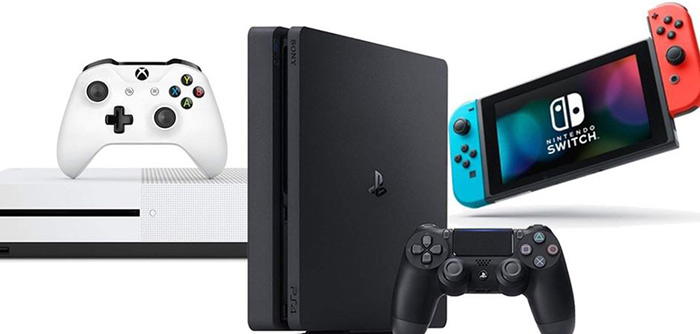
Popular game consoles such as PlayStation and Xbox also support MP4 playback, typically using H.264 or H.265 video with AAC or AC-3 audio. Compatibility may vary depending on system version and firmware updates, but MP4 remains one of the most widely supported formats for media playback on gaming devices.
Older devices such as PSP also support MP4 playback with specific encoding profiles, although support is more limited compared to modern consoles.
Part 3. Compare MP4 with MKV, AVI, and Other Formats
 MP4 vs MPEG-4
MP4 is a multimedia container format, while MPEG-4 refers to a digital coding standard used for video compression. MP4 files can contain MPEG-4 encoded video, but they can also store other codecs such as H.264 and H.265. In other words, MPEG-4 defines how video is encoded, while MP4 defines how media is stored.
 MP4 vs MP3
MP3 is an audio-only compression format designed for storing music and speech. MP4, on the other hand, is a container format that can store video, audio, subtitles, and images in a single file. Because of this, MP4 is used for multimedia content while MP3 is limited to audio playback.
 MP4 vs M4V
M4V is closely related to MP4 and is mainly used within Apple’s ecosystem. Both formats use the same container structure, but M4V may include DRM protection and is more commonly associated with iTunes and Apple devices, while MP4 is more universally supported across platforms.
 MP4 vs MKV
Both MP4 and MKV are flexible container formats that can store video, audio, and subtitles. MKV is more open and flexible in terms of features and supports a wider range of codecs and tracks, while MP4 focuses more on compatibility and efficient playback across devices and platforms.
 MP4 vs AVI
AVI is an older container format developed by Microsoft, while MP4 is a more modern and efficient format. MP4 offers better compression and broader device compatibility, and is more commonly used for online streaming and mobile playback compared to AVI.
 MPEG-4 vs MPEG-2
MPEG-2 is mainly used for DVDs and traditional broadcasting, while MPEG-4 is designed for more efficient compression and is widely used for online video, mobile devices, and streaming platforms. MPEG-4 generally provides better quality at smaller file sizes compared to MPEG-2.
MP4 vs H.264
MP4 is a container format, while H.264 is a video codec used to compress video data. H.264 encoded video is often stored inside MP4 files, but it can also exist in other containers such as MKV or AVI. The two are related but serve completely different roles in video processing.
What Are the Differences Between MP4 and Other Formats?
| File Type | MP4 | MKV | AVI | MOV |
| Video Codec | H.264, H.265, MPEG-4 Part 2, VC-1 and others | H.264, H.265, VP9, AV1 and others | Depends on system codecs | H.264, ProRes, MPEG-4, DV and others |
| Audio Codec | AAC, MP3, AC-3, ALAC, LPCM and others | AAC, MP3, FLAC, Opus and others | Depends on system codecs | AAC, MP3, ALAC, PCM and others |
| Subtitle Support | Yes (embedded text tracks) | Yes (advanced subtitle support) | Limited support | Yes (text-based tracks) |
| Compatibility | Very high (nearly all devices) | High (best on modern players) | Medium (older systems) | High (Apple ecosystem) |
| Use Case | Streaming, sharing, general use | Archiving, high-quality storage | Legacy video files | Editing and Apple devices |
Part 4. How to Open and Play MP4 Files
As the most welcomed container, general MP4 video file can be played facilely on computers, TVs and movable smart devices, like Windows Media Player (11/12) can play MP4 movies on Windows, QuickTime helps you watch MP4 files on Mac, iPhone's native Video app is able to open MP4 video clips be default, without help from any other hardware or software.
You can open MP4 files on Mac with QuickTime Player, on Windows with Windows Media Player, or on VLC Media Player. Locate the MP4 video file and double-click the file to open and play. Make sure those codecs used by the MP4 file are supported by the media player on Windows or macOS.

List of Best MP4 Video Player for Windows 10/11, macOS, iOS, Android
As a matter of fact, all video player software features MP4 video playback. What's the best MP4 player? We will give you a detailed comparison of top video players (5KPlayer, VLC player, KMPlayer, RealPlayer) for your reference. Check out:
| 4K/HD Playback | Yes | Yes | Yes | Yes |
| 3D/VR Playback | Yes | Yes (via some modifications) |
Yes (3D mode) |
No |
| Subtitle Support | Yes | Yes | Yes | Yes |
| Online MP4 Video Download | Yes | No | No | Yes |
| Platforms | Windows, Mac | Windows, Mac, Linux, iOS, Android | Windows, Mac, iOS, Android | Windows, RealTimes for Mac/iOS/Android |
| Price | Free | Free | Free | Free download and premium plans |






Which MP4 Players Support MP4 Video Streaming?
- 5KPlayer: Yes (via AirPlay & DLNA)
- VLC: Yes (over computer networks)
- KMPlayer: Yes (from PC to devices)
- RealPlayer: Yes (via Xbox One, Roku, Chromecast)
As stated above, MP4 video format features a strong compatibility, high compression with smaller size while reserving superb quality, easy Internet streaming, etc., all of these have made the popular MP4 format the first priority when ripping DVD or converting videos.
How to Convert Videos DVDs to/from MP4 Format
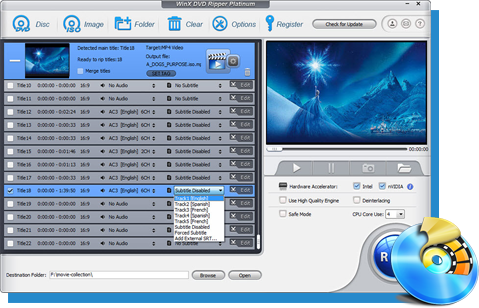
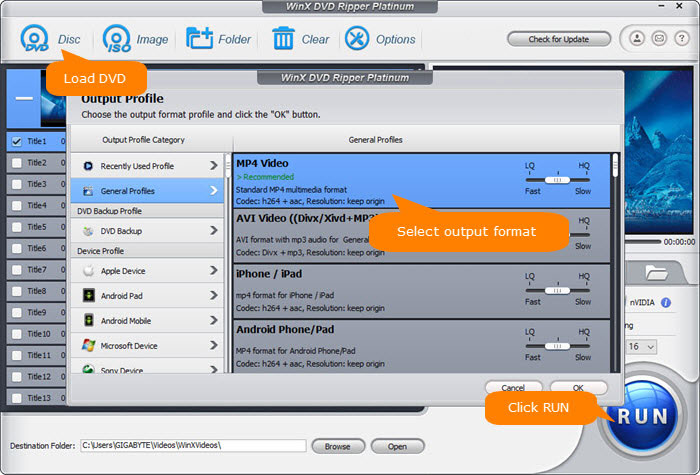
Many people have a common need of converting DVD to MP4 video for later playback of the DVD movie on Windows (11) PC, Mac, iPhone (13/Pro), iPad, Android, etc., but how could easily realize it? WinX DVD Ripper Platinum, a solid DVD to MP4 ripper, enables users to smoothly convert any protected DVD (incl. latest Disney DVD) to MP4 or other formats/devices in about 10 minutes with highest quality.
But due to the multiplex combinations of video, audio and subtitles codecs, it yield MP4 file with dissimilar file extensions, and the media transmitting medium with inclusive player cannot play all MP4 file formats accordingly. This gives rise to hunt MPEG-4 codec pack up for further MP4 enjoyment. Many situations also bother when MP4 fails to unfold, the gadget has no enough space for watching MP4 smoothly, or the aspect ratio of raw MP4 video does not perfectly fit the player screen. An MP4 video converter can solve these problems. Winxvideo AI ranks on the top in consideration of conversion speed, ease of use, stable performance, versatile video editing features, etc.
Part 5. FAQs about MP4 File Format
1. What does MP4 stand for?
MP4 stands for MPEG-4 Part 14. It’s the short form of MPEG-4 Part 14. Sometimes MP4 is also known as MPEG -4 AVC(Advanced Video Coding). MPEG is an abbreviation of Motion Pictures Expert Group that sets industry standards for digital video and audio.
2. What does an MP4 file do?
MP4 is a container format and an MP4 file stores video, audio, and other metadata such as subtitles, still images, and more. The MP4 file can be encoded with different codecs in smaller file sizes with the best possible quality.
3. What is the difference between MP3 and MP4?
MP3 stands for MPEG-1 Audio Layer 3 and is an audio format. MP4 is a container format. MP3 and MP4 are different formats. The MP3 file format only stores s single media file - audio format. MP4 format supports video, audio, and other types of media files like subtitles, and still images. MP4 files can be encoded with an MP3 audio codec.
4. Is MP4 just for video?
No, MP4 can store video, audio, subtitles, images, etc. MP4 is a video container format that can contain a wide range of video and audio. The MP4 file format supports various types of codecs, such as MPEG-1, MPEG-2, MPEG-4 and H. 264/AVC, H. 265/HEVC, and many more.
5. How do I open an MP4 file?
You can open the MP4 file with a built-in MP4 video player on your device. For example, you can open MP4 files on Mac with QuickTime Player, on Windows with Windows Media Player. VLC Media Player can open an MP4 file on Windows, macOS, Linux, Android, and iOS. Just locate the MP4 file, double-click the file, and the MP4 should play on your device.
6. What is the difference between MP4 and video format?
MP4 (MPEG-4 Part 14) is a specific type of video file format. It is a digital multimedia container format used to store video, audio, and other data such as subtitles, still images, and metadata. MP4 files are commonly used for sharing video content over the internet, as they provide a good balance of quality and file size. Video format, on the other hand, is a more general term that refers to any type of digital video file. There are many different types of video formats, each with their own strengths and weaknesses. Some common video formats include AVI, MOV, WMV, and FLV.
7. Is MP4 a high quality format?
MP4 can provide high-quality video content, but it ultimately depends on the resolution, bitrate, and codecs used to encode the MP4 file. MP4 is capable of supporting resolutions up to 4K and beyond, and can also support high-quality audio formats such as AAC and MP3. Some popular codecs for MP4 files include H.264, H.265 (also known as HEVC), and VP9. The quality of an MP4 file is largely determined by the codec used to compress the video data.